Akousma
International Festival of Immersive Digital Music
Upcoming Concerts!
October 17-18 — November 13, 2026
Augmented Concert
October 21–22–23, 2026
Akousma Festival: Evening 1 — Evening 2 — Evening 3
Subscribe to our newsletter so you don’t miss a thing!
︎︎︎
Akousma Festival
Join us for the 2026 edition of the festival (Akousma 22), taking place October 21, 22, and 23.
Get your tickets
Subscribe to our newsletter so you don’t miss any of our 2026–2027 programming!

Program
︎︎︎
October 21, 2026
Evening 1 –
8 p.m.
Block_1

1345 Ave. Lalonde, Montréal, QC H2L 5A9
Get your tickets
Simon Laroche (ca)
Simon Laroche produces transdisciplinary works that comprise robotics, electronics, video, audio and performance elements. He has developed a critical and experimental approach to the hybridization of artificial, biological and social systems, questioning the impact of technology on the construction of social and psychological realities.His current research focuses on transcopy, dissociation, and commodification. Since 2003, Simon has presented participatory pieces, performance and installation work at major festivals, biennales and museums (Ars Electronica, ISEA, Elektra/BIAN, la Villette, MACM, Némo, Wro, FILE, etc.) in Paris, London, Brussels, Budapest, Leipzig and elsewhere in Europe, Asia, the Middle East and the Americas. He is co-founder of Projet EVA.
Website
Program
Primum Mobile (2026) 10’
Primum Mobile is a kinetic sound work composed of a set of metal reeds that vibrate according to different schemas of activation. Fixed to the ceiling and spinning rapidly above the audience, the installation generates mechanical, cyclical, and repetitive aerial and acoustic turbulence. The drone emitted by the object and its textures is reminiscent of the omnipresence of information technologies, which inspires both fascination and apprehension. The suspended structure dominates the room and seems to hover above viewers, suggesting the panoptic presence of a flying drone.
The artwork uses simple harmonic structures that evolve slowly, in a cyclical and repetitive manner, sometimes approaching noise. Being concretely spatialized by a mechanical device, the reeds produce a complex set of microtonal resonances and variations. The linear simplicity of the moving object, which transforms its area of reception into an undulating terrain that can be navigated, is reminiscent of certain types of sculpture that fully engage the space by soliciting an active and spatial reception, far from a passive and disembodied contemplation.
As part of Akousma, the work—originally conceived as an installation presented in the dark—has been specially adapted for the evening: amplified, it becomes a performance tool.

Crédit photo : Emem Etti
Crédit photo : David Wong
 Crédit photo : David Wong
Composition Competition JTTP 2026
The Canadian Electroacoustic Community’s (CEC) Jeu de temps / Times Play competition showcases new electroacoustic works by young and emerging composers and sound artists from or living in Canada.

Alex Brisson (ca)
Alex Brisson is a Montreal based composer of fixed-media acousmatic music and occasionally videomusic. He holds a bachelor of music in electroacoustic composition and sound creation from the Université de Montréal, where he studied under Martin Bédard, Erin Gee and Nicolas Bernier, as well as Daniel Perez Hajdu while on exchange at ARTS² in Mons, Belgium.His fixed-media compositional practice focuses primarily on abstraction and structural form. His choice of the fixed medium is explained by his interest in the discursive potential of digital media and its seemingly infinite plasticity and capacity for reorganization.
Brisson's works have been presented in Belgium, Canada, and France.
︎
Program
A a Ba A ɓA Bɐ (2026) 8’
This piece was composed primarily from sound materials generated through feedback synthesis, in which the output of the synthesis acts as a causal agent upon its own source. This technique is particularly well suited to generating sound objects with rich spectra. The piece explores a direct and causal mode of writing, where impulses trigger stases, phrases, suspensions, and surprises.
The concept of feedback is also embedded in the work’s organizational structure. At first, the motifs appear singular and eclectic, but they soon begin to recur, taking on new functions, foreshadowing future sections, and returning in transformed forms. Earlier sections are reimprinted and merged to create familiar entities from the past, giving rise to an internal memory that remains in constant variation. This form of feedback, in which the beginning affects the end and the end affects the beginning, reaches an ambiguous conclusion through what we seem to have already heard.
The title alludes to traditional musical forms based on recurring structures.

Composition Competition Petites Formes 2026
The 2026 Petites Formes Acousmatic Music Composition Competition is organized as part of a cultural exchange between Taiwan, Japan, Canada, and France. It aims to promote acousmatic music and support emerging composers working in this field in Canada, Spain, France, Japan, and Taiwan.
Akousma presents the Canadian winner of the competition.
The complete list of competition winners is available here.

Melanie Zhou (ca)
Melanie Zhou is a Canadian composer and pianist based in Montreal, currently studying composition at McGill University. Her practice explores the intersections of acoustic, electroacoustic, and hybrid sound, with timbre, gesture, and spatialization as core compositional materials.She is particularly interested in sound perception and transformation, with a practice shaped by dialogue with performers and experimentation in rehearsal. She has studied composition with Philippe Leroux, Jean Lesage, Melissa Hui, Chris Paul Harman, Eliot Britton, and Félix Frédéric Baril. In 2026, Inter Mentes: A Lament was the winner of Category A at the international Petites Formes competition in Paris.
︎ | ︎
Program
Inter Mentes: A Lament (2025) 6’09”
This electroacoustic work is inspired by Bert Meyers’s poem Lament. Its three sections follow the poem’s stanzas and explore memory, loss, and an awareness of the passage of time.
The first section evokes the absence of someone who has passed away through low-frequency materials derived from synthesizers and transformed recordings of everyday objects. Their repetition and spatial movement suggest an inner conversation between the living and the departed.
The second section turns toward memories of childhood, its vulnerability and innocence. High-pitched gestures and crystalline, bell-like sonorities evoking moonlight create a sense of both intimacy and distance.
The final section draws inspiration from the lines: “The same clouds come and go; the same bird sings or flies.” Unstable textures and fragments of the work’s initial material gradually transform before fading away, leaving behind a few sonic traces — like a memory that endures while slowly releasing its hold.

Crédit photo : Meng Meng
Diego Bermudez Chamberland et Xavier Ménard (ca)
Diego Bermudez Chamberland is a Latino-Québécois sound artist whose practice lies at the intersection of composition, live musical performance, mixing, and sound design. He is currently exploring the sonic potential of ceramics through the creation of hybrid instruments and the digital processing of their timbres. His experimental projects combine acoustic and digital technologies, bringing together digital arts, experimental instrument-making, and electronic music. Committed to knowledge sharing, he also takes part in educational and outreach activities.︎ | Website
Xavier Ménard is a Montreal-based composer and sound artist who graduated in Digital Music from the Université de Montréal. His practice explores electrical devices such as switches and oscillators to create textures at the intersection of the organic and the industrial. His work encompasses performance, interactive installation, and the development of web-based composition tools.
︎ | Website
Program
Palabras pour cette DOUCE violence
Soy viento y machina (2026) 20’00”
Using handcrafted ceramic sound devices and electromechanical sound generators, the two artists present at Akousma a multichannel version of this new performance, creating a dialogue between instrumental gesture, digital sound processing, and spatialization.
The work draws on the image of the winter wind — a force at once gentle and brutal, familiar and unpredictable. It becomes a metaphor for memories that unexpectedly surface throughout our lives. The piece reflects on the very real difficulty of expressing oneself and existing within difference, and on how these experiences can sometimes compel us to become a kind of machine in order to survive.
Soy viento y machina
Comme une machine s’a run à 200 km/h sur l’autoroute des rêves
Soy sueno
Comme un rêve qui navigue la chair
Respire
Como un viento que habla la verdad
Soy viento y machina
Une machine fluide para vivir
Vie de brume et d’eau
Pura vida comme qu’y disent le monde

Crédit photo : Diego Bermudez Chamberland
October 21, 2026
Evening 1 –
Block_2

1345 Ave. Lalonde, Montréal, QC H2L 5A9
Get your tickets
Manuella Blackburn (gb)
Manuella Blackburn is an electroacoustic music composer specializing in acousmatic music. She studied music at the University of Manchester (England, UK), completing a PhD in electroacoustic composition under the supervision of Ricardo Climent in 2010.Her music focuses on intricate details and the careful grouping and arrangement of small sounds within clear, polished sonic environments. Her recordings of everyday objects, environments, and instruments are transformed into new works, turning the ordinary into the extraordinary.
Manuella Blackburn’s music has been presented at numerous concerts, festivals, conferences, and exhibitions in Germany, Argentina, Belgium, Brazil, Canada, Chile, Korea, Costa Rica, Cuba, Spain, the United States, France, Italy, Japan, Mexico, Portugal, and Sweden.
︎ | ︎ | Website
Program
List of works:
• Home Truths (2023) 7’00
• Microplastics (2021) 8’00
• Landline (2018) 9’33
• Train of thought (2025) 8’45
Home Truths (2023)
Interruptions dominate this composition, acting as pauses, abrupt stops, moments cut short and held breaths. These moments represent the many interruptions experienced in my daily life, in work, activities and composing. Interruptions are temporal states where continuity is ceased but then resumed or returned to after the interrupting event is over. In this work, interruptions are positioned as the main event; acting as focal points and instances to explore the creative potential of these typically unwanted occurrences. There are many different types of interruptions constructed throughout the composition. These show the different outcomes between successful versus unsuccessful interruptions, those that form segues to those that forcefully threaten and break down sound’s continuous presence. This creative experimentation with many interruptions is set within the context of home life and home sounds. These sounds tell a story, imitating interruptions to flow, being in the home for extended periods and all this entails.
Microplastics (2021)
Microplastics is an acousmatic work derived solely from plastic sound sources. These sounds are predominately from waste accumulated from household use (empty milk containers, bottles, straws, lids, cling film, and wrappers). Further sources were captured at the Manchester Education Centre and Materials Recovery Facility in Sharston (England, UK), which illuminated ways in which plastics are separated and sorted by the Aladdin machine. This visit provided an eye-opening visual for the monumental scale of plastic waste, which is represented sonically half-way through the work through an unprocessed raw recording of plastic rubbish being dumped out into a colossal mountain of unbelievable proportions.
Further to these recordings and sources are sounds collected from micro-sized plastics, sourced from the south coast of England courtesy of Rob Arnold (visual artist and microplastics cleanup expert). These microplastic pieces, no larger than 5mm in diameter, are a mix of worn-down remnants of past plastic objects (lids, shards, tubing, rims and strips) and ‘nurdles’ or ‘bio-beads’ waste, which present hazardous, detrimental ecological damage to marine life and the environment. The plastics industry converts nurdles into plastic products, however the movement and transportation of these tiny pellets of plastic regularly encounter accidental spills, spreading out into water and drainage systems. Bio-beads are equally problematic, entering the sea via their use in sewage filtration systems. These minuscule plastic particles can be mistaken for food by marine life and birds in the environment. This work explores the sound world of this disastrous pollution and unfortunate particles debris that now inhabit the world in insurmountable quantities.
Landline (2018)
I have vivid memories of my landline telephone in the home I grew up in. It was an old-style shiny black rotary dial phone, with its own table, accompanied with directory and phone book, all situated in the entrance hallway. As I grew up, the home telephone changed size and shape, the rotary dial disappeared and was replaced with touch-tone buttons, and then eventually it became cordless, liberating the user from its fixed location. I realized recently that I had not used my current landline telephone in a long time. It had fallen behind some furniture and become caked in dust. When I came to use it, it felt strange and the sounds it created made me curious about this somewhat endangered household object. I became fascinated with the dial-tone sound and later discovered that landline dial-tone sounds are not the same in every country. For some of my non-British friends and family, dial-tone pitches appeared to be a type of cultural sound emblem reminding them of home. The UK’s dial-tone is a combination of sine waves mixed from 350Hz and 450Hz, while the North American is a combination of 350Hz and 440Hz. In this piece I have explored my landline telephone in all its glory and have tried to recreate and reimagine the sounds of that first home telephone I remember from when I was younger.
Train of thought (2025)
Thoughts broken into disjointed fragments. Distractions, changes of plan and multitasking chaos break the continuity of my ideas. This work is about capturing something in its complete form; a train going by, a walk outside, a musical idea and then breaking it harshly so it does not finish or follow its intended course. Incomplete trajectories and sounds, unexpectedly cut short, form a metaphor for my thinking as I become diverted in everyday life. Focused, uninterrupted thinking and creative time seem like a distant memory. Crafting interruptions shape pauses, stoppages and collisions with silence to mark out and celebrate the cutouts of sound. The piece was commissioned by the DEGEM through the Thomas-Seelig-Fixed-Media-Preis 2025

Chantal Dumas (ca)
Chantal Dumas sadly passed away in 2026. Akousma wished to honour her memory by inviting two of her close colleagues and friends, Christian Calon and Magali Babin, to perform three of her works, celebrating the richness and singularity of her sonic world.Born in Drummondville, Quebec, Chantal Dumas was a sound artist and radio artist whose practice also encompassed installation, storytelling, and sound design. Trained in Jaques-Dalcroze eurhythmics at Université Laval and later in interactive media at UQAM, she developed an approach beginning in the 1980s in which the microphone, listening, and in situ recordings were central to her practice.
Her works explored themes such as time, space, territory, and listening, often incorporating mapping as a compositional principle. Voice, immersion, and audience participation also played an important role in her work. Her creations were broadcast by numerous international radio stations, including the BBC, ABC, Deutschlandfunk Kultur, and Radio-Canada, and presented at festivals, museums, and art venues across Canada, Europe, and the United States.
A frequent collaborator with artists from dance, poetry, visual arts, and performance, Chantal Dumas received numerous distinctions, including Prix Opus awards, the Phonurgia Nova International Competition, and the Prix Bohemia Radio. A grant recipient of the Conseil des arts et des lettres du Québec (CALQ) and the Canada Council for the Arts, she completed residencies in New York and Paris, chaired the Phonurgia Nova jury, and was the subject of a major bilingual publication devoted to her artistic career in 2019.
︎
Program
Jouer avec le feu (2006) 6’05”
Spatialized by Magali Babin
Beats, breaths, crackles, impulses. So many signs of life and death, and so many sounds that emerge, propagate, and fade away. Each sound is, in some way, a fiction — a story of life and death.
Featuring elements from the free Freesound library, with particular contributions from Acutescream, Cfork, Emmanuel, Fonogeno, Greyseraphim, Jovica, Cyril Laurier, Leady, Luffy, Lunardrive, Suonho, and Victorcenusa.
S/T/W/T (2006) 7’00”
Spatialized by Magali Babin
“In a stellar swarm, the city suspended, a world reduced to its radiance and pierced by black holes from which escape the sleep of men, dreams, nightmares, insomnia, night shifts, crimes.” — Jean-Luc Nancy, The City Far Away
S/T/W/T was created in the context of the collaborative project Montreal Sound Matter, bringing together eight sound artists. The guiding principle was the use of a shared sound library made up of field recordings captured in Montreal.
“Far from the postcard image, this sonic portrait offers an abstract view of Montreal, composed of fragments that have been shaped or transformed. Through these places turned into more or less unrecognizable non-places, S/T/W/T conveys an emotional experience of the city.” — Esther Bourdages
Migration océane (remix 1997) 18’36”
Spatialized by Christian Calon
Le PARFUM DES FEMMES
The collection Le parfum des femmes, which includes Migration océane and other works, brings together stories centred on the theme of migration. Each work portrays a form of displacement involving humankind and/or nature.
The migration of the cold Atlantic waters is paralleled with the journey of a woman leaving Europe to reach the American continent.
Le parfum des femmes was awarded First Prize at the EAR’97 International Electroacoustic Music Competition of Hungarian Radio (Budapest, Hungary), as well as First Prize at the Phonurgia Nova International Radio Art Competition (France) in 1997.

Crédit photo : Veronica Mockler
October 22, 2026
Evening 2 –
8 p.m.
Block_1
1345 Ave. Lalonde, Montréal, QC H2L 5A9
Get your tickets
Futur Antérieur
At AKOUSMA, we love presenting pioneering works from the repertoire, which notably led us, during our previous edition, to revisit the work of Daphne Oram (1925–2003).This year, we delve into the music of Forbidden Planet, the science-fiction classic celebrating its 70th anniversary! Composed in 1956 by Bebe and Louis Barron, this music takes us back to a “Futur Antérieur,” a time when anything still seemed possible and the future felt as though it were just around the corner.
Bebe et Louis Barron (us)
“Bebe Barron, an electronic music composer, was born in Minneapolis in 1925. While studying composition, she met pianist Louis Barron, who was more interested in electronics than performing. They married in 1947 and moved to Greenwich Village, where they began experimenting with a reel-to-reel tape recorder, manipulating recorded sounds through changes in speed, reversal, and tape splicing. Louis designed electronic circuits to generate sounds, while Bebe shaped and organized the resulting material. Part of New York’s avant-garde scene, they became associated with artists such as Anaïs Nin and John Cage, who encouraged their experiments in electronic music.Their major breakthrough came with Forbidden Planet. Initially hired to provide electronic sound effects, the Barrons were eventually commissioned to create the entire soundtrack. Louis generated sounds using custom-built vacuum-tube circuits, often pushing them to the point of failure, while Bebe transformed and assembled the recordings through extensive tape manipulation.
Released in 1956, Forbidden Planet became a landmark of science-fiction cinema. Its extraordinary electronic soundtrack blurred the distinction between music and sound effects, creating an unprecedented sonic environment for a major Hollywood film.
Because of restrictions imposed by the Musicians’ Union, the Barrons could not be credited for a musical score and were instead credited with creating “electronic tonalities,” making them ineligible for an Academy Award nomination. Their groundbreaking work nevertheless remains a milestone in the history of electronic music and film sound.”
Excerpt from a text by science historian Dr. William B. Ashworth, available here.
Program
Forbidden Planets exerpts (1956) 10’

Affiche publicitaire du film (1956)

Bebe et Louis Barron dans leur laboratoire sonore à Greenwich Village, photographie, sans date (independent.co.uk).
Felix Deufel (de)
Felix Deufel is a sound artist and sound ecologist whose work focuses on spatial sound, spatial hearing, and the relationship between soundscapes, society, and the environment.Through field research and expeditions, he explores environmental issues related to ecosystems and human influence in the Anthropocene. His research investigates the soundscapes of environments including the Himalayas, tropical and subtropical rainforests, the Greenland ice sheet, and the Arctic underwater world.
His artistic practice encompasses spatial installations, compositions, performances, and field research, often through collaborative and interdisciplinary approaches combining music, dance, performance, and film.
Founder of Not a Number Studio, which specializes in 3D audio, Deufel also founded the Center for Immersive Media Art, Music and Technology (ZiMMT) in Leipzig in 2020, a space dedicated to the creation, experimentation, and presentation of immersive media art and spatial sound.
Website
Program
LOST IN LIQUID NOISE (2023-2026) 20’
Chaque jour, le Groenland perd 600 millions de tonnes de glace. Une réalité difficilement perceptible — nous l’avons rendue audible.
Lost in Liquid Noise est une œuvre audio 3D multicanale entièrement composée à partir d’enregistrements de terrain réalisés par Felix Deufel au cours de deux expéditions dans l’Arctique (2023–2024) : vêlage des glaciers, eaux de fonte sous-glaciaires, tremblements de glace, systèmes de moulins glaciaires, captations sous-marines sous les mers gelées, icebergs à la dérive, présence de baleines et première floraison printanière du plancton.
Spatialisée sur un dispositif tridimensionnel de haut-parleurs, l’œuvre fait voyager l’auditeur à travers des textures sonores en constante évolution, allant de microdétails cristallins à d’impressionnantes ruptures glaciaires. Le bruit agit ici à la fois comme matière physique et comme métaphore : surcharge environnementale, transformation continue, perte de contrôle.
En l’absence de repères visuels, le son devient à lui seul le moteur narratif, brouillant les repères spatiaux et plongeant l’auditeur dans un état d’écoute profonde. Le changement climatique devient ainsi perceptible, non pas par l’explication, mais à travers une expérience spatiale, physique et sonore directe.


Crédit photo : Nina Buttendorf

Christine Groult (fr)
Christine Groult’s work is rooted in the exploration of an expressive electroacoustic music, attentive to the poetic potential of sound and its evocative power. Her compositions often draw on the observation of physical phenomena, materials, movements, and transformations. Through images and metaphors, these experiences of the external world become models of thought that resonate with the most intimate dimensions of human experience — our emotions and the forces that move through us and set us in motion. Her compositional language emerges from this passage between the concrete and the symbolic, in a constant dialogue between sensory experience and thought. Her interest in places rich with imaginative potential has also led her to create site-specific works and sound environments. Her works are regularly performed in France and internationally.Trained at Radio France’s Groupe de Recherches Musicales (GRM) with Pierre Schaeffer, at the Conservatoire expérimental de Pantin, and in musicology and linguistics at the Sorbonne, Christine Groult was an assistant in IRCAM’s pedagogy department from 1976 to 1986. After directing the electroacoustic music studio at the Conservatoire de Chalon-sur-Saône from 1985 to 1990, she taught electroacoustic composition at the CRD de Pantin until 2015.
︎
Program
Eaux mêlées (2021) 30’
Commissioned and developed during a residency at Logelloù, a centre for exploration and creation in Côtes-d’Armor, Brittany. Premiered in September 2021 at the remarkable site of Le Yaudet, on the banks of the Léguer estuary.
The intimate union of land and sea characterizes the landscape of the Côtes-d’Armor (Brittany). It is impossible to clearly distinguish the boundary between land and sea, between solid and fluid elements. Rocks, sea, river, foreshore, salt marshes… all intertwine, while the sea reaches inland through the estuaries.
A meditative journey infused with the scent of the estuary and its mingling waters, of mud and primordial matter.
Featuring nature recordings by Marc Namblard (audio naturalist), as well as sounds recorded with Noëlle Deffontaines (dancer), Benjamin Dousteyssier (saxophone), and Lê Quan Ninh (percussion).

Crédit photo : Philippe Ollivier
October 22, 2026
Evening 2 –
Block_2
1345 Ave. Lalonde, Montréal, QC H2L 5A9
Get your tickets
Barry Truax (ca)
Barry Truax is a Professor Emeritus in the School of Communication at Simon Fraser University. He worked with the World Soundscape Project, editing its Handbook for Acoustic Ecology, and has published a book Acoustic Communication, that deals with sound and technology, now in its 2nd edition.In 1991 his work, Riverrun, was awarded the Magisterium at the International Competition of Electroacoustic Music in Bourges, France. Truax’s multi-channel soundscape compositions are frequently featured in concerts and festivals around the world.
In 2015-16 he was the Edgard Varèse Guest Professor at the Technical University in Berlin. As a teacher at SFU, he was given the University’s Award for Teaching Excellence in 1999, and an Honorary Doctor of Fine Arts in 2025. He was also appointed to the Order of Canada in 2025.
Sonus | Website
Programme
The Elemental Trilogy
Octophonic Works by Barry Truax
What The Waters Told Me (2022) 11’37’’
How The Winds Caressed Me (2023) 12’20’’
When The Earth Mourned For Me (2024) 12’20’’
This trilogy of recent pieces attempts to blur the distinction between natural and human sounds through hybridizing material from both sources, based on three of the primary elements – water, wind and earth. In the current ecological crisis, we may come to understand ourselves as an integral part of our environment that we need to respect.
What The Waters Told Me: If we listen carefully to flowing water in all of its varied forms, we may begin to hear voices and ascribe human emotions to them. The voices may be argumentative, even angry, as at the start of our journey, but suddenly they become hushed as we enter a large cavern. A mysterious voice seems to give us commands as we await the next stage, while ethereal voices guide us along. The commands become more insistent until the waters burst forth with transcendent song in a celebration of water and life.
How The Winds Caressed Me: The wind is a restless and devious presence in our lives, revealing itself as an invisible, tactile experience, and aurally only in what it is interacting with. It can pretend to speak to us with a voice when it passes through a narrow opening, or it can even resemble a musician when it activates a string – the Aeolian effect – or resonates a tube with its breath. And its moods can range from being a relentless, stormy foe, to the gentlest of caresses. This piece propels us through its repertoire, eventually enveloping us in an ocean of transcendence.
When The Earth Mourned For Me: With each passing day, we see evidence of our deteriorating environment and that evokes in us a personal and collective grief. We mourn for the earth, but if we listen to its cries, does it also mourn for us, the instigators of its demise? This piece invites us to listen to the voices of the earth that may emerge even from what we have extracted from it. The journey proceeds in four overlapping sections: Choir, Lament, Anguish, and Threnody.

Roxanne Turcotte (ca)
A composer and sound designer, her musical aesthetic is rooted in a cinematic approach to integration that she calls cinemasonics. Roxanne Turcotte also creates and performs music for television, cinema, radio, the stage, the web, and circus arts, in addition to creating sound, music, and visual installations. She is frequently invited to serve on composition juries and conducts training sessions, lectures, and composition workshops. Roxanne Turcotte is currently working on the integration of sound installations and live performance with multichannel fixed media.Originally trained as a pianist at the Conservatoire de musique de Montréal, she pursued graduate studies in electroacoustic composition under the guidance of Marcelle Deschênes et Francis Dhomont, and in 1988 became the first woman to earn a master’s degree in electroacoustic composition from the Université de Montréal. The music of Roxanne Turcotte has won numerous awards and distinctions (USA, France, Canada). In 2021 she received SOCAN’s Jan V Matejcek Award for New Classical Music. Her electroacoustic works have been programmed by several international festivals.
Roxanne Turcotte has been a member of the Artistic Committee (2016-2021) of the Société de musique contemporaine du Québec (SMCQ), is a member of the boards of directors of the CMC Québec (2016-), and of the Groupe Le Vivier (2021-).
︎ | Website
Program
Artéfacts (2024-2026) 13’45’’
Launch of the album Sillages on empreintes DIGITALes
https://electrocd.com/fr/album/6828-roxanne-turcotte-sillages
An introspective microcosm. Camouflaged sounds coming from everyday objects, greatly perennial living beings or miscellaneous recordings made on my travels (Seychelles, New Zealand) and in other favourite locations along my strolls.
Coleopterans, dipterans and hemipterans were here long before us and left indelible ecological footprints. I can hear a cicada sing very close to me, and it makes me think about past existence and locations. Cicadas appeared 264 million years ago. Their song was appreciated by the Ancient Greeks. Well hidden and sheltered underground, cicada larvae can wait up to 17 years before emerging, depending on the location, but they die very quickly once out. It says a lot about their longevity and past civilizations. The cicada’s song is produced by a vibrating membrane; it can reach 100 decibels. I am fascinated by them.
Memories, like cicadas, are similar to fossils. They represent lived experiences, social and political situations, man-made objects, and most of all circumstances and chance turning points. Will you be able to recognize a few witnesses of life on Earth in this work?
Various sections of this work have symbolic pauses between them illustrated by the voice of actor Laurent Poitrenaux. They act as structural breaths throughout the work, but also as witnesses to a culture and a vision of our vitality. Traces — some disquieting, other reassuring or comforting — show that we are alive even when we are dead. These quotes are taken from plays that remain unknown, despite constant archeological research, and have become artifacts.
There are also excerpts from interviews by host Michel Dupuis at CIBL in 1985, by Hélène Prévost at Radio-Canada in 1986 with composers Claude Lassonde and Michel Ratté, among others, and by Michel Rochon recorded by La conserve média in 2021.

Crédit photo : Roxanne Turcotte

October 23, 2026
Evening 3 –
8 p.m.
1345 Ave. Lalonde, Montréal, QC H2L 5A9
For its 22nd edition, Akousma invites you to experience an evening that explores the immersive concert from a different perspective. In an open format where listening can also unfold through movement, audiences are invited to move freely through a sonic space shaped by the work of an eclectic lineup of artists — a hallmark of Akousma. A fluid and immersive evening offering a chance to discover experimental music at the forefront of contemporary sound creation.
Get your tickets
Simon Laroche (ca)
Simon Laroche produces transdisciplinary works that comprise robotics, electronics, video, audio and performance elements. He has developed a critical and experimental approach to the hybridization of artificial, biological and social systems, questioning the impact of technology on the construction of social and psychological realities.His current research focuses on transcopy, dissociation, and commodification. Since 2003, Simon has presented participatory pieces, performance and installation work at major festivals, biennales and museums (Ars Electronica, ISEA, Elektra/BIAN, la Villette, MACM, Némo, Wro, FILE, etc.) in Paris, London, Brussels, Budapest, Leipzig and elsewhere in Europe, Asia, the Middle East and the Americas. He is co-founder of Projet EVA.
Website
Program
Primum Mobile (2026) 10’
Primum Mobile is a kinetic sound work composed of a set of metal reeds that vibrate according to different schemas of activation. Fixed to the ceiling and spinning rapidly above the audience, the installation generates mechanical, cyclical, and repetitive aerial and acoustic turbulence. The drone emitted by the object and its textures is reminiscent of the omnipresence of information technologies, which inspires both fascination and apprehension. The suspended structure dominates the room and seems to hover above viewers, suggesting the panoptic presence of a flying drone.
The artwork uses simple harmonic structures that evolve slowly, in a cyclical and repetitive manner, sometimes approaching noise. Being concretely spatialized by a mechanical device, the reeds produce a complex set of microtonal resonances and variations. The linear simplicity of the moving object, which transforms its area of reception into an undulating terrain that can be navigated, is reminiscent of certain types of sculpture that fully engage the space by soliciting an active and spatial reception, far from a passive and disembodied contemplation.
As part of Akousma, the work—originally conceived as an installation presented in the dark—has been specially adapted for the evening: amplified, it becomes a performance tool.
Crédit photo : Emem Etti
Crédit photo : David Wong
Jen Reimer (ca)
Jen Reimer is an artist and musician who explores resonance and the embodied experience of sound and space through site-specific performance, installation, and spatial recording. Her collaborative projects have been presented at Lisboa Soa, Tsonami Arte Sonoro, Tokyo Arts & Space, Sonic Topologies and Société de musique contemporaine du Québec. She often collaborates with Max Stein and shares a singing practice, Tunnel, with Maggie Tiesenhausen.︎ | ︎ | Website
Program
Song of Air (2026) 25’
Song of Air documents a live, site-specific performance in the Humboldt Water Tower in Humboldt, Saskatchewan. Over three years, Jen Reimer recorded the tower's sounds and developed a custom digital instrument shaped by its architecture, highlighting its resonant interactions with the wind.
Repeated encounters with the tower and its physical and acoustic responses guided the composition of Song of Air, which unfolded through cycles of recording; layering; and playing the instrument back into the space. During the performance, loudspeakers and tactile transducers pushed vibrations through the tower's steel and wood surfaces, activating it as a large-scale musical instrument.
Structured in four movements, the work explores the water tower as both instrument and composition, revealing the resonances of its material structure and the air within.


Alexis Blais (ca)
Alexis Blais (born in 1998, he/him) is a sound artist based in Montreal. Raw and corrosive, his acousmatic and mixed works explore concrete sound materials through a sculptural approach, set against a backdrop of modal harmonies. A graduate of the Université de Montréal in sound creation, his research focuses on exploring creative dynamics and fluid hierarchies in electroacoustic collaboration.Alexis also works in theatre and dance. His piece Skand (2021) was awarded First Prize in the 2024 Destellos Competition (Argentina). His works have been performed in Japan, England, Europe, South America, and Canada.
︎ | Website
Program
Constellation (2025) 20’
Constellation originated as a sound design created for a choreography by Annie Gagnon. In the work, the performers enact a series of incantations centred around the zodiac, unfolding through six meditative tableaux. Their rituals give rise to dynamic systems in which each performer responds to the prayers and acts of care of the others. I therefore conceived the sound as a vast bed in which their invocations could unfold.
The music explores different relationships to cyclicality and the cumulative orchestration of heterogeneous sound materials, ranging from recordings of creaking metal to samples of instrumental music. The version presented at Akousma is a 20-minute excerpt from the original album, reworked as a multitrack version for the festival’s acousmonium.
Mouvements :
1. Sagitta
2. Libra
3. Apus
4. Pyxis
5. Antlia pneumatica
6. Cetus

.618 (ca)
.618 is the sonic alias of Nick Rony, whose emotionally charged compositions weave together field recordings, electronic textures, and organic instrumentation. His practice explores the concept of geotrauma and its imprint on collective memory, giving rise to immersive soundscapes that transcend genre boundaries.Rooted in his Ayisyen heritage, .618’s work examines the persistence of history — the ways in which it permeates identity, experience, and perception. His art becomes a means of revisiting ancestral memory and exploring diasporic narratives through a deeply personal lens.
Guided by themes of territory, exile, and African symbolism, his sound work is intricate and evocative, treating sound design as a narrative medium in its own right. His performances are imbued with a spectral presence, connecting territory to trauma and memory to movement. Each performance becomes an emotional excavation and a spiritual ritual.
︎ | ︎
Program
Vows of Return (2026) 20’
Voices, percussion, breath, and fragments of Vodou ceremonies move through a constantly shifting electronic fabric. Through a custom-built sonic environment, .618 manipulates these traces as a form of living memory: they move, distort, and overlap, at times becoming unrecognizable.
Spatialization transforms the listening environment into a shifting space, where sounds seem to emerge from different depths, like presences circulating around the body. Somewhere between ritual and abstraction, the performance seeks less to tell a story than to make its traces felt — what remains, what returns, what eludes us.
Each performance thus becomes an unpredictable encounter between recorded material, improvised gesture, and space.

Crédit photo : Vivien Gaumand
Audréanne Filion (ca)
Myriam Bleau (ca)
Audréanne Filion is a Montreal-based cellist and composer active in contemporary and experimental music. She has premiered works by Canadian composers including Sarah Davachi, Martin Arnold, and Simon Martin, and is a member of Quatuor Mémoire, No Hay Banda and Ensemble Éclat.
Her solo project for cello and electronics explores improvisation and the hybridization of ambient, noise, and contemporary styles.
She has performed at, among others, Gaudeamus Musiekweek (NL), Festival CHIII (BR), Darmstädter Ferienkurse (DE), M/NM, and Semaine du Neuf. Also active in experimental pop, she has collaborated with Everly Lux, Xela Edna, and Erika Angell. She trained at the Conservatoire de musique de Montréal (Denis Brott, Elizabeth Dolin, Louis Dufort, Martin Bédard).
︎ | Website
Myriam Bleau is a composer, digital artist and performer based in Montréal. Using music and sound as a point of departure, she creates audiovisual performances, acoustic and electronic music compositions, video works, installations and interfaces that articulate sound, light and movement.
Her work is mainly channeled through performance, embracing ephemeral and elusive contexts. From code and abstraction to physical computing and devices, she considers technology as another agency that co-creates the output. Her hybrid practice explores porous spaces between the physical and the virtual world, between the natural and the synthetic.
Her work has been recognized and presented internationally in festivals and events such as Prix Ars Electronica (AT), Sónar (ES, HK), Transmediale (DE), Rewire (NL), Sonic Arts Award (IT), Elektra (CA), Mutek (MX, CA, JP, AR), ISEA (CA, KR), ACT (KR), L.E.V (ES), Café Oto (UK).
︎ | Website
Program
Live 20’
Audréanne Filion and Myriam Bleau present a study in the interaction between cello and electronics, in which acoustic and synthetic elements attempt to merge into a single responsive, ever-shifting organism. Each section was conceived as a “sound object” to be observed in space, from different angles, rather than solely through time.
Following a residency at EMS in Stockholm in July 2025, the two composers/performers explore feedback, parallelism, real-time spatialization, controlled signal degradation, overflowing distortion, and an oscillation between softness and noise.

Crédit photo : Hamza Abouelouafaa
Joël Lavoie (ca)
Joël Lavoie is a composer, sound artist, and sound engineer based in Montréal/Tiohtiá/Mooniyang, Canada. His compositional, performative, and installation-based practice explores the entanglements between humans and non-humans, the role of agency in listening practices, and the politics, aesthetics, and methodologies of acoustic ecology, with a particular interest in speculative soundscapes, temporality, sonic materiality, algorithmic manipulation, and immersive listening experiences. He is a member of the audiovisual trio mesocosm and has collaborated with numerous visual and performance artists.In addition to composition and sound design, he works as a sound engineer, a practice that has allowed him to bring his sonic vision into the world of the performing arts. In 2023, he received a Félix Award (ADISQ) for Sound Design for Performance of the Year. His work has been presented at MUTEK, Elektra, Akousma (Canada), Pretxe, ACC, Dotolim (South Korea), C-Lab (Taiwan), V2_ Unstable, FIBER (Netherlands) Mans Sonore, Blockhaus (France), Videocittà (Italy), Currents (United States), Kontejner (Croatia), Forma, Sejf (Poland), and Fylkingen (Sweden), among others.
︎ | Website
Programme
Cet horizon qui se déplie (2026) 17’
By manipulating micro-loops and fragments of recordings captured during sonic drifts through various urban, natural, and oneiric environments, this piece explores the improbable permutations and perceptual entanglements in the spontaneous recomposition of a deep timescape; a horizon unfolding before us.

Crédit photo : Geneviève Grenier
Exzald S (fr)
Exzald S is the project of producer, composer, and vocalist Sarah Foulquiere. Ethereal yet untamed, her electronic music explores the invisible layers of emotional and experiential worlds, weaving together intricate sound design, voice, and dreamlike abstraction.Her discography includes Iridesc, her solo album released in 2025 on Subtext Recordings; Labège, created with mu tate and NEXCYIA and released on Good Morning Tapes; as well as several collaborations with Aho Ssan and a contribution to Berlin Atonal’s More Life.
Through her recordings and performances, Exzald S shapes a singular sonic language centred on the unconscious and the ineffable.
︎ | Website
Programme
Magnetics (2026) 19'51’’
“In her dreams, voices, memories, and synthetic debris attract, repel, and intertwine, tracing a new cartography of passages, thresholds, and horizons.”
Magnetics reconfigures fragments from the album Iridesc (2025, Subtext Recordings) alongside previously unreleased material into a labyrinthine composition.

Crédit photo : Exzald S
Ka Baird (us)
Ka Baird is a performer, sound artist, musician and composer based in New York City. Using extended voice and microphone techniques along with electronics, feedback, field recordings, and traditional instrumentation, they explore the outer dimensions of sound through performance. They create a present tense sound with a vigorous, ritualistic delivery that seeks extreme release through physical exertion and psychic extension. Ka has collaborated with many other artists, both in structured compositions and through their dedicated practice of improvisation.Their solo releases include "Sapropelic Pycnic" (Drag City 2017), "Respires" (RVNG Intl 2019), "Brooding Exercises" (Longform Editions 2021), and "Vivification Exercises" (RVNG Intl 2021). In March 2024, they released their most recent solo record entitled "Bearings: Soundtracks for the Bardos" through Brooklyn imprint RVNG Intl. Recent national and international engagements have included performances at Unsound Festival (Krakow, PL), Lampo (Chicago, IL), Museum of Contemporary Art (Chicago, IL), MoMA PS1 (Queens, NY), Issue Project Room (Brooklyn, NY), The Kitchen (NYC), The Institute of Contemporary Art (Philadelphia, PA), TUSK Festival (Newcastle, UK), Incubate (Tilburg, NL), KRAAK (Brussels, BE), Le Guess Who (Utrecht, NL), and the Festival Of Endless Gratitude (Copenhagen, DK). They have been artist-in-residence at We Jazz Festival (Helsinki, FI), Sonoscopia (Porto, PT), Inkonst (Malmo, SE), Experimental Sound Studio (Chicago, IL), and Pioneer Works (Brooklyn, NY). They have been a recipient of the Foundation of Contemporary Art's Emergency Grant, a Jerome Foundation Artist-In-Residence at Roulette Intermedium, and was a Jerome Hill Artist Fellow through 2023-25.
They are one of the core members of Spires That In The Sunset Rise, founded in Chicago in 2001.
︎ | ︎ | Website
Program
A thousand miles of hungry static 20’
Ka Baird presents "A thousand miles of hungry static", a performance piece that explores the spectral forces of reality through various sonic encounters and physical movement.
The piece features extended voice and microphone techniques, live-processed flutes, samples, feedback, fractured rhythms, and interfaces that both trigger and manipulate sound. The performance embodies Ka’s signature tone that is simultaneously confrontational, mysterious, visceral, and humorous.

Crédit photo : Rémi Goiulet
Augmented Concert
“The Augmented Concert” is a pioneering research-creation project that proposes, for the first time in a structured way, the use of new audio technologies—particularly bone-conduction headphones—in electroacoustic music concerts.
5 concerts - 3 venues!
Click on the poster for more information.


Électrochoc
The Électrochoc concert series, co-presented by the Conservatoire de musique de Montréal and Akousma,
features concert-dialogues that introduce audiences to the many facets of electroacoustic music while showcasing the talent and creativity of students in the composition classes of Martin Bédard and Louis Dufort, the series’ two co-artistic directors. The program for the Soundwich evenings will be announced at a later date.2026–2027 Season
Électrochoc No. 1: Experimental Music at the NFB: From Norman McLaren to Francisco Lopez — September 10, 2026
Soundwich XXIII — November 19, 2026
Électrochoc No. 2: Orchestroll — December 10, 2026
Électrochoc No. 3: Claude Périard — January 21, 2026
Soundwich XXIV — February 18, 2027
Électrochoc No. 4: Navid Navab — March 25, 2027

September 10, 2026
ÉLECTROCHOC No. 1
Experimental Music at the NFB: From Norman McLaren to Francisco López
Talk 7:30 PM / Screening 8 PM

4750, Av. Henri-Juilien
Get your tickets
Frédéric Savard
CuratorFrédéric Savard is a musician, archivist, and independent curator with a particular interest in the integration of archival materials into contemporary audiovisual works. His interest in history, music, and cinema has led him to serve as a guest curator at the Cinémathèque québécoise, the JazzAhead festival in Germany, as well as the Suoni Per Il Popolo and Pop Montréal festivals in recent years. He currently works at the National Film Board of Canada while continuing his activities as an independent curator.
Program
The experimental music produced in the studios of the National Film Board of Canada remains far too little known to this day, despite its historical significance. With the exception of Norman McLaren’s work, which has earned an international reputation, the original soundtracks created at the NFB by various filmmakers and composers constitute a remarkable archival treasure that is rarely presented.
This special program brings together eleven original works, presented chronologically, and was conceived to highlight the technical innovations developed at the NFB over the years in the fields of musique concrète, electronic, and electroacoustic music. The program features original compositions by Norman McLaren, Pierre Hébert, Alain Clavier, Jean Sauvageau, and Francisco López, to name just a few.
An event not to be missed by film lovers with a passion for the avant-garde and audiovisual innovation.
1. Mosaïque - ONF ( 1965 – Musique : Norman McLaren / Réalisation : Norman McLaren & Eve Lambart – 5’)
2. Test 0558 - ONF (1965 – Musique: Maurice Blackburn / Réalisation : Bernard Longpré – 5’)
3. Op Hop - Hop Op - ONF (1966 – Musique : Pierre Hébert / Réalisation : Pierre Hébert – 4’)
4. Autour de la perception - ONF (1968 – Musique : Pierre Hébert / Réalisation : Pierre Hébert – 16’)
5. Dimension soleils - ONF (1970 – Musique : Gilles Tremblay (SMCQ) / Réalisation : Raymond Brousseau & Bernard Longpré – 4’)
6. Ordinateur (1970 – Musique : Jean Sauvageau / Réalisation : Pierre Cornellier – 7’)
7. Modulo : variations sur un design - ONF (1973 – Musique : Alain Clavier / Réalisation : Pierre Moretti – 7’)
8. Variations graphiques sur Télidon par Pierre Moretti - ONF (1980 – Musique : Alain Clavier / Réalisation : Pierre Moretti – 7’)
9. Rectangle et rectangles - ONF (1984 – Musique : Normand Roger / Réalisation René Jodoin – 8’)
10. Mamori - ONF (2010 –Musique : Francisco López / Réalisation Karl Lemieux – 8’)
11. Sans objets - ONF (2019 – Musique : Cédric Dind-Lavoie, Julie Cloutier Delorme, Martin Tétreault, Simon Drouin, Thierry Guibert, Klaus Filip, Arnold Haberl, Billy Roisz, Dieter Kovacic. / Réalisation : Moïa Jobin-Paré – 6’

Frédéric Savard, crédit : M. T.

Norman McLaren, crédit : O.N.F.

Pochette de disque conçu par Norman McLaren (1977), crédit : O.N.F.
Augmented Concert
“The Augmented Concert” is a pioneering research-creation project that proposes, for the first time in a structured way, the use of new audio technologies—particularly bone-conduction headphones—in electroacoustic music concerts.
5 concerts - 3 venues!
Click on the poster for more information.

Support us
Since its founding in Montreal in 1991, AKOUSMA has presented more than 350 concerts of immersive digital music, mixed music, visual music and other acousmatic art forms, mainly through the ‘Rien à voir’ series (15 editions between 1997 and 2004) and its AKOUSMA festival (22th edition in October 2026).
During this period, more than fifty new works were commissioned from local artists. It certainly helped to expand the field of possibilities in terms of sound art, and has reached thousands of listeners.
Your donation will allow new initiatives in creation and distribution of immersive digital music.
Charitable registration number: 88699 9242 RR0001


Akousma Remix
Four videos featuring performances from different concerts,
recorded during the Akousma 17.
Scroll down to watch our remixes, which
will be published over the summer and fall of 2022. Huge thanks to La Conserve Média for recording and editing.
This project was made possible thanks to the Canada Council for the Arts’ Digital Now initiative.
Remix_01
Akousma Remix_01 from AKOUSMA on Vimeo.
In this remix
Marcelle Deschênes
Kevin Austin
Chantal Dumas
Véro Marengère & Alain Lefebvre
Frédéric Auger
Anne-F Jacques
Louis Dufort
Jesse Osborne-Lanthier
Remix_02
Akousma Remix_02 from AKOUSMA on Vimeo.
In this remix
Félix-Antoine
Morin
Martín Rodríguez
Mélanie Frisoli
Micheline Coulombe Saint-Marcoux
France Jobin
Sarah Feldman
Xavier Madore
Dominic Jasmin
Gilles Gobeil
Remix_03
Akousma Remix_03 from AKOUSMA on Vimeo.
In this remix
Hugo Tremblay
Jean-François Blouin
Claude Périard
Rouzbeh Shadpey
Gisèle Ricard
Blablatrains
Pauline Patie
Robert Normandeau
Gilles Gobeil
Remix_04
Akousma Remix_04 from AKOUSMA on Vimeo.
In this remix
Érick d’Orion
Pablo Geeraert & Joseph Sims
Stéphane Roy
Roger Tellier-Craig
Erin Gee
Jean-François Denis
Léa Boudreau
Christophe Lengelé
Robert Normandeau
About
Scroll down for more on the many faces of Akousma
History, mission and aknowledgementsThe organization ︎ The team
Awards ︎Major events
︎︎︎
History, mission, and
acknowledgements
Akousma
(formally Réseaux des arts médiatiques) is a concert production company that showcases
works by electroacoustic artists and collectives in Montréal. These works are
presented via an immersive sound system, and they take several forms:
acousmatic (tape music), mixed (tape and instruments), live (live electronics),
video music, or music integrated into other art forms such as dance,
performance, or installation.Composers Jean-François Denis, Gilles Gobeil, and Robert Normandeau founded Akousma in Montréal in 1991. They shared the role of artistic director for 17 years, until 2008 when they passed the baton to Nicolas Bernier for the 2008–2009 and 2010–2011 seasons. That same season, Réjean Beaucage took on the role of director general, with support from Louis Dufort as artistic director for the 2011–2012 season onward.
Akousma would like to thank the Canada Council for the Arts, the Conseil des arts et des lettres du Québec, the Conseil des arts de Montréal and Canadian Heritage for their support for its operation. Akousma also receives valuable support from the Socan Foundation for its activities. Le Vivier and the Conservatoire de musique de Montréal are important broadcasting partners.

The organization
UNIQUE IN CANADA
AKOUSMA is the leading presenter of electroacoustic music not only in Quebec, but also in Canada. Quebec composers are widely recognized for their success in major international competitions, and if we can speak of a “Montréal school” of electroacoustic music, this is because there is a concert production company like Akousma to showcase its work.
AKOUSMA is highly active in Montréal’s creative and experimental music scene and frequently collaborates with other organizations in the same vein. Over the years, we have presented works in partnership with Artengine (Ottawa), SMCQ, Orgue et couleurs, NEM, Avatar, FIMAV, Machines, Recto-Verso, Eastern Bloc, Codes d’accès, and Le Vivier, alongside collaborations with Radio-Canada, Musée d’art contemporain de Montréal, ACREQ, and others.
AKOUSMA also works actively for the future of creative and experimental music in Montréal through Le Vivier, a coalition of nearly 50 organizations working in the new music sector, whose main goal is to establish a site for performance and creation at the heart of Montréal. Since 1997, Akousma has commissioned 54 works, of which the list can be found here.
DIGITAL MUSIC OF ALL KINDS
Following on from the Rien à voir concert series (1997–2004), which was entirely dedicated to acousmatic music, the Akousma festival was launched in 2005 to showcase the wider spectrum of electroacoustic music—from musique concrète to visual music, mixed music, and live performance.
To this end, the concert production company adds more names to its list of partnerships each year, allowing it to hold concerts across Montréal (at Eastern Bloc, the SAT, Le Vivier, and Suoni) as well as extending its action further afield (to Victoriaville, Joliette, Gatineau, Quebec City, Ottawa, and Troy [NY]). The diverse range of venues in which Akousma holds its concerts reflects the multitude of paths that electroacoustic music has taken since Pierre Schaeffer’s musique concrète first encountered Karlheinz Stockhausen’s electronic music. In the decades between their era and our own, computer technology has mutated to democratize the means of production; as a result, what was once the music of the future has gradually become part of our day-to-day landscape. Today, while university music departments provide the opportunity to learn and master the intricate parameters of sound, many sound artists achieve their expertise via the self-directed and self-taught route.
For this very reason, and while embracing the full range of practices within the genre, Akousma also works hard to promote young local and international artists alongside the veterans and pioneers who paved the way in Quebec and worldwide. And, in his ten years as artistic director, Louis Dufort has built up an impressive list of invitees:
Adrian Moore (GB) – Alain Lefebvre – Alain Thibault – Aho Saan (FR) – Adam Basanta – Adam Stanovic (GB) – Ana Dall-Ara-Majek – Andrea Parkins (US) – Annette Vande Gorne (BE) – Antwood (CA) – Atte Elias Kantonen (FI) – BEFACO (ES) – Bénédicte – Ben Vida (US) – Bérangère Maximin (FR) – Bernard Parmegiani – Benjamin Thigpen (US) – Brunhild Ferrari (FR) – Byron Westbrook (US) – Cendrine Robelin (FR) – Chris Strickland – Christian Bouchard – Christian Calon – Christophe Lengelé – Claude Périard – Concordia Laptop Orchestra – Daniel Menche (US) – David Arango-Valencia – David Berezan (CA/GB) – David Cronkite – Diego Bermudez Chamberland – Dominic Jasmin – Dominic Thibault – Devon Hansen – Elias Merino (ES) – Éliane Radigue (FR) – Elizabeth Anderson (US/BE) – Emilie Payeur – Erin Gee – Estelle Lemire – Estelle Schorpp – Falaises – Felisha Ledesma (SE) – Fernando Murillo (MX) – Florence-Delphine Roux – FÜNF – Franck Vigroux (FR) – Francis Dhomont (FR/CA) – Francisco Lopez (ES) – François Bayle (FR) – François Bonnet (FR) – France Jobin – Frédéric Auger – Frédéric Janelle – Gilles Gobeil – Giant Claw (US) – GMACKRR – Golden Retriever (US) – Gonima – Guillaume Cliche – Guillaume Côté – Ggroundd – Hanna Hartman (SE) – Hildegard Westerkamp (CA) – Horacio Vaggione (FR/AR) – Hugo Tremblay – Ilyaa Ghafouri – Ilpo Vaisanen (FI) – Jane/Kin – Jana Winderen (NOR) – Jean-François Blouin – Jean-François Denis – Jean Piché – Jessica Ekomane (FR) – Jesse Osborne-Lanthier – John Chantler (AU) – John Rea – John Young (NZ) – Joël Lavoie – Jon Vaughn (CA) – Joséph Sims – Julien Racine – Julie Delisle – Juliane Hoff – Junya Oikawa (US) – Jullian Hoff – Karlheinz Stockhausen (DE) – Katie Finn – Keith F. Whitman (US) – Lea Bertucci (US) – Laurie Radford (CA) – Lea Boudreau – Line Katcho – Lise-Lotte Norelius (SE) – Loscil (CA) – Louis Dufort – Ludwig Berger (DE) – Lucas Paris – Magnitude6 – Manja Ristic (RS) – Marc Behrens (DE) – Marja Ahti (FI) – Marie Anne – Marie-Hélène Breault – Marie-Jeanne Wyckmans (BE) – Martin Bédard – Martin Marier – Martin Messier – Martin Rogriguez – Martina Lussi (CH) – Mathieu Bezkorowajny – Maxime Corbeil-Perron – Mikael Meunier-Bisson – Michel Chion (FR) – Minibloc – Monique Jean – Monty Adkins (GB) – Mourad Bncr – Myriam Bleau – Myriam Boucher – Nadia Ratsimandresy (FR) – Nashim Gargari – Natasha Barrett (GB/NO) – Nicolas Bernier – Nicolas Giannini – Nicolas Ratti (IT) – Nicolas Thirion (FR) – Nick Storring – Nicola Giannini – Olivia Block (US) – Oren Ambarchi (AU) – Panayiotis Kokoras (GR) – Patrick Saint-Denis – Paulina Sundin (GB/SE) – Pauline Patie – Philippe Leroux (FR/CA) – Philippe Vandal – Pierce Warnecke (FR/US) – Pierre Alexandre Tremblay – Pierre-Luc Lecours – Pierre-Luc Senécal – Pierre-Yves Macé (FR) – Pipo Pierre-Louis – Pita (GB) – Projection: Luc Ferrari (BE) – Quatuor Bozzini – Rashad Becker (DE) – Rene Hell (US) – Richard Chartier (NL) – Richard Devine (US) – Robert Hampson (GB) – Robert Normandeau – Rocio Cano Valiño (AR) – Roger Tellier-Craig – Rose Bolton (CA) – Roxanne Melissa Guerra-Lacasse – Roxanne Turcotte – Rouzbeh Shadpey – Ryu Yoshizawa (JP) – Sarah Belle Reid (US) – Sarah Feldman – Scant Intone (CA) – Seth Nehil (US) – SPIEL – Stephan Mathieu (DE) – Stéphane Roy – Sylvain Pohu – Tempo Reale (IT) – Terri Hron (CA) – Thomas Ankersmit (NL) – Tomoko Sauvage (JP) – Tristan Perich (US) – Valerio Tricoli (IT) – Vanessa Massera – Véro Marengère – Vincent Fliniaux – Vincent Gagnon – Vivian Li – Xavier Madore – Yves Charuest – Yves Daoust
The team
Artistic director : Louis Dufort
Louis Dufort is a Montréal composer. His productions are numerous and of multiple forms: fixed support, mixed with live processing, visual music, and installation. He has received several commissions from various musical ensembles and organizations: ACREQ, SMCQ, Réseaux, Chants libres, Codes d’accès, ECM, Quasar saxophone quartet, Quatuor Bozzini, The Users, Musée Pointe-à-Callière, ZKM (Germany), SIXTRUM, and Radio-Canada. He has also been a regular collaborator with COMPAGNIE MARIE CHOUINARD since 1996. Louis Dufort has a PhD in electroacoustic composition from the Université de Montréal, and he teaches composition at the Conservatoire de musique de Montréal. He has been Akousma’s artistic director since 2010.
Director general: Réjean Beaucage
Following Following studies in literature at the Université du Québec à Montréal, Réjean Beaucage turned his attention both to music (as a self-taught drummer) and to radio (mainly at CIBL-FM, where he was a researcher, director, producer, and presenter from 1985 to 2002). He won the Prix Opus from the Conseil québécois de la musique in the “Production médiatique de l’année 1996-1997” (Media production of the year, 1996–1997) category for his series of radio programs AnémixinémA/Zone sonore. Alongside these pursuits, his interest in print journalism led him to become a regular contributor to Montréal weekly magazine Voir between 2001 and 2020. He has also written for La Scena Musicale, Circuit, and Improjazz (France), among many other magazines and journals. He has written a book on the history of the Société de musique contemporaine du Québec (Septentrion, 2011) and an essay on musique actuelle (Varia, 2019). He has been Akousma’s director general since 2010. and since August 2025 he is also the director of the magazine Circuit, musiques contemporaines.
Coordinator of Mediation and Audience Development: Marie Anne Bérard
Marie Anne Bérard (she/her) is a composer and keyboardist based in Montreal. Her practice focuses on electroacoustic performance, installation, and the use of sound journaling as a compositional method. She is currently pursuing a master's degree in composition and sound creation at the Université de Montréal.
Web developper : Diane Kim-Lim
Technical director / soundman (Usine C) : Frédéric Auger
Photograph (concerts) : Caroline Campeau
Archive Website managed by DIM
Board of directors
- President : Simon Laroche – new media artist, professor (Concordia University)
- Vice-president : Pierre-Alexandre Bouchard, producer (cinema)
- Secretary : Marc Langlois, artists agent
- Treasurer : Martin Duchesne, administrator
Other members:
- Louis Dufort – composer, professor (CMM)
- Catherine Harrison-Boisvert – professor (Vincent-D’Indy School), editorial advisor
- Alain Roy, account manager (CEV)
- Rahab Hazgui — Transdisciplinary audio artist — E.D., perte de signal
Artistic committee
- Myriam Bleau – new media artist, composer
- Myriam Boucher – composer, professor, video artist
- Maxime Gordon – sound artist
- Evan Magoni – sound artist
- Roger Tellier-Craig – composer, improviser
Awards
PRIX OPUS 2001-2002: “Presenter of the year”
PRIX OPUS 2003-2004: "Concert of the year - New/electroacoustic music": Rien à voir (14) — Luigi Ceccarelli
PRIX OPUS 2004-2005: "Concert of the year - New/electroacoustic music": Akousma 1 — Theresa Transistor
PRIX OPUS 2005-2006 "Concert of the year - New/electroacoustic music": Akousma 2 — Pierre Alexandre Tremblay: Alter ego
PRIX OPUS 2009-2010: “Concert of the year - New/electroacoustic music“
PRIX OPUS 2011-2012 "Concert of the year - New/electroacoustic music": Akousma 8 - Soirée «sens_action»: France Jobin
PRIX OPUS 2016-2017 "Artistic director of the year": Louis Dufort
PRIX OPUS 2021-2022 "Special Mention" for the video recording of No Age, Know Age, News Age Music, played by Jesse Osborne-Lanthier (Akousma 17)
Akousma Festival
Join us for the 2025 edition of the festival (Akousma 21), taking place October 29, 30, and 31.
Subscribe to our newsletter so you don’t miss any of our 2025–2026 programming!
October 29, 2025
Night 1 -
8pm
Bloc_1
1345 Ave. Lalonde, Montréal, QC H2L 5A9
2025 JTTP composition contest
The Canadian Electroacoustic Community’s Jeu de temps /Times Play competition highlights new electroacoustic works produced by young or emerging composers and sound artists from or living in Canada.
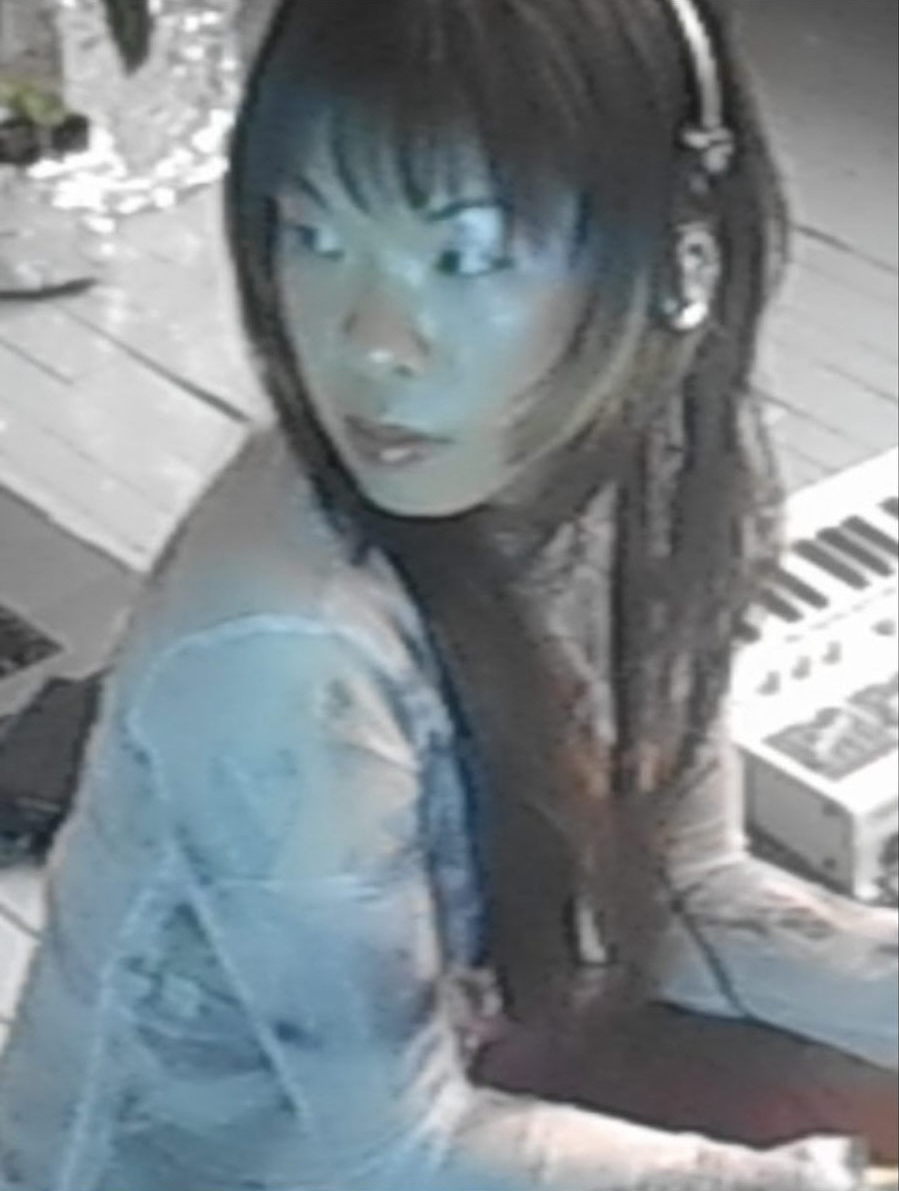
Vivian Li (cn/ca)
A recent graduate of Université de Montréal, Vivian Li is a Tiohtià:ke/Montréal-based sound artist and composer whose work explores the interplay between memory, presence, and the ephemeral nature of lived experience. Through field recordings, radiophonic techniques, and spatial composition, they construct immersive sonic environments that drift between documentary and poetry—where laughter, rain, and half-heard conversations become resonant archives of lived experience. She has performed and presented work at venues and festivals nationally and internationally, such as Karachi Biennale, Akousma (Montréal), MUTEK(Montréal), Pique (Ottawa), Sound Art Lab (Struer), Inkonst (Malmö), Eastern Bloc(Montréal), perte de signal (Montréal), Kwia (Berlin), and Fondation Phi x Nuit Blanche (Montréal).Program
Sonic Memories of Fleeting Times | 流声逝忆 (2025) 15’00”
Spatialized by Maxime GordonSonic Memories of Fleeting Times | 流声逝忆 is a multiphonic, spatialized acousmatic piece that adopts a documentarist approach, exploring themes of intimacy, memory, and time through an aesthetic inspired by radio art. The work draws on autobiographical sound recordings — capturing moments at once mundane, intimate, and deeply personal — to create an immersive experience that transports the listener into another reality, another space-time.
*
A collection of lived experiences—
laughter, rain, eavesdropped conversations—
preciously fading, as they form.
To remember is to listen closely,
before they recede into the realm of memories.
~ ~ ~
“The curated recording is a hedge against mortality, the fragility of memory, and the ever-receding substance of history.” — Jonathan Sterne
Credit : Madeleine Roy
Bruno Belardi (it)
Bruno Belardi is a musician and composer from Naples. He studies Classical Double Bass and explores Electronic Music under the guidance of Elio Martusciello at the San Pietro a Majella Conservatory in Naples. His works have been presented at festivals such as Artescienza (Italy), Tempo Reale (Italy), Apnées – Paysages | Composés (France), Lisboa Incomum – Projecto DME(Portugal), Overdrive NYC (USA), and Ignite the Arts Festival (Canada). His acousmatic pieces have been recognized as finalists at MA/IN (2024), Musicacoustica Hangzhou (China, 2024), Soundcinema Düsseldorf (Germany, 2024), and Concurso Destellos (2024). Bruno has also been awarded at the Totem Electroacoustic Contest (2025) and Landscape (2024).Program
Gaman 11’01”
Award-winning piece of the Akousma Prize at the 2025 Totem Electroacoustic Competition
Gaman is a Japanese concept that evokes resilience, perseverance, and the quiet strength required to endure adversity. This piece investigates not only the boundaries of such endurance, but also its fragility — suggesting that, in the tension between resistance and collapse, a form of beauty or inner force can emerge. From a compositional standpoint, the piece is built around strong dynamic contrasts: moments of suspension and stillness are interrupted by abrupt sonic outbursts. This alternation reflects the internal struggle between maintaining balance and being overwhelmed by external pressures. Spatialization plays a crucial role, helping to shape a listening space that mirrors the surrounding chaos — while also tracing the listener’s effort to remain grounded within it. The sound material comes entirely from the acoustic instruments of Productions Totem Contemporain (PTC)
We thank the Italian Cultural Institute of Montreal for making the artist’s presence at the festival possible.

Philippe Macnab-Séguin (ca)
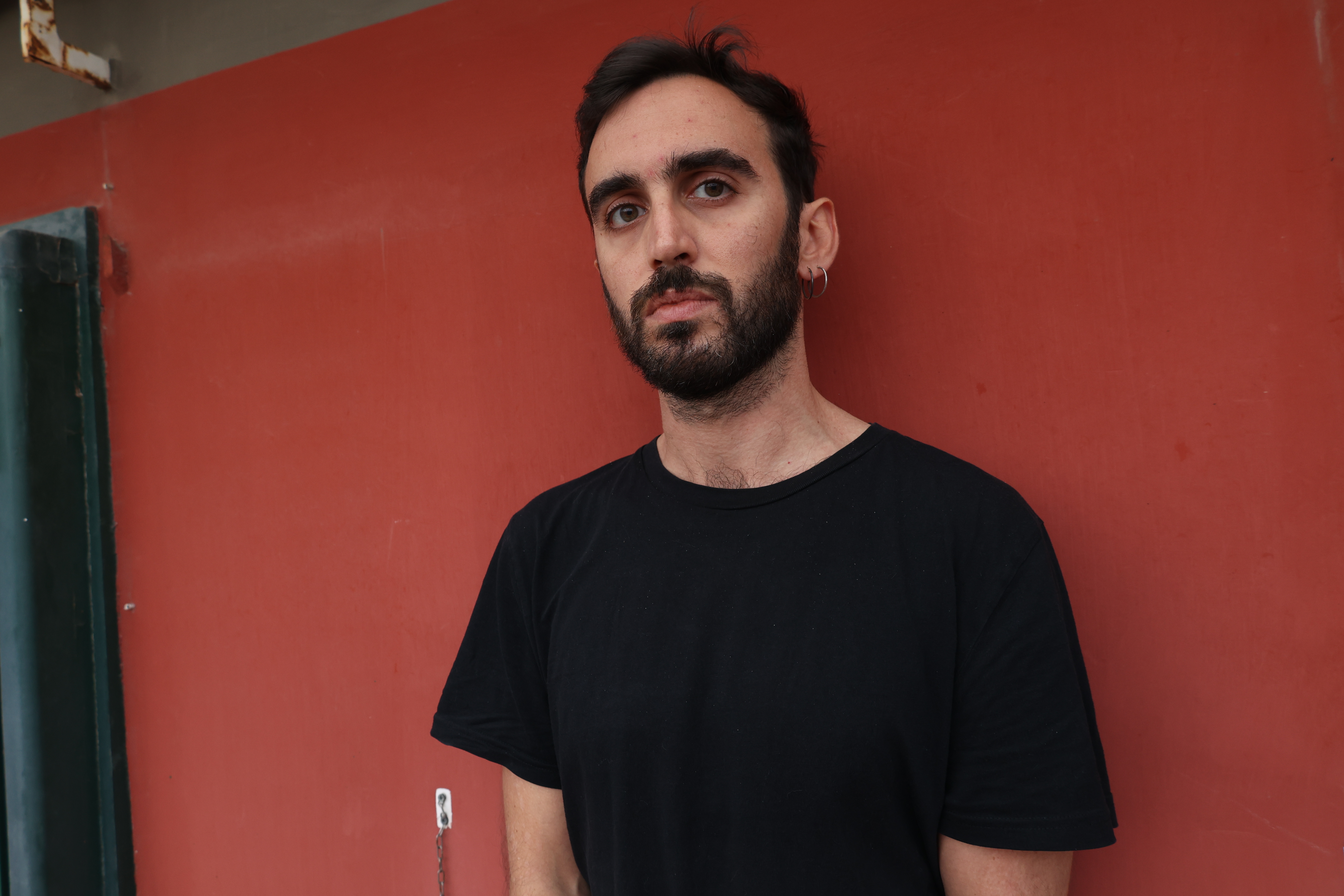
Philippe Macnab-Séguin is a composer of instrumental, fixed-media, and mixed music whose work combines, collides, and refracts diverse styles through the lens of new media technologies such as spatial audio, live electronics, video, and smart phone applications. His music reflects his eclectic musical background spanning metal, jazz, South Indian percussion, Barbershop, glitch and experimental pop production. He and producer Nicolas Gaumond form the prog-pop duo Greetings From The Hole, and Aural Sonology, a phenomenological method of musical analysis, plays a large role in his research.He has received over 25 scholarships and awards for his work, including the Prix d’Europe, a BMI award, 2nd placein the Graham Sommer Competition for Young Composers, four SOCAN young composer awards, a JTTP award, and funding from the SSHRC and FRQSC. He received his D.Mus in composition from McGillUniversity under the supervision of Jean Lesage.
Program
Gone for Eggs 23’34”
"Just as life gestates in the egg, so in ancient healing rituals would initiates withdraw into a dark cave or holeto “incubate” until a healing dream released them reborn into the upper world, in the same way the chickcrawls out of the egg.”-The Book of Symbols, The Archive For Research In Archetypal Symbolism
Every night, we experience a small taste of death when we lose consciousness in the depths of sleep. Every morning, we are born anew. Gone For Eggs takes this fundamental experience as a starting point to explore the oscillation between day and night, consciousness and unconsciousness, life and death. The texts were written by Philippe Macnab-Séguin and Nicholas Papaxanthos; portions of the Book of Symbols reproduced with permission from The Archive For Research In Archetypal Symbolism.

Credit : Clayton Kennedy
October 29, 2025
Night 1 -
Bloc_2
1345 Ave. Lalonde, Montréal, QC H2L 5A9
Stéphane Roy (ca)
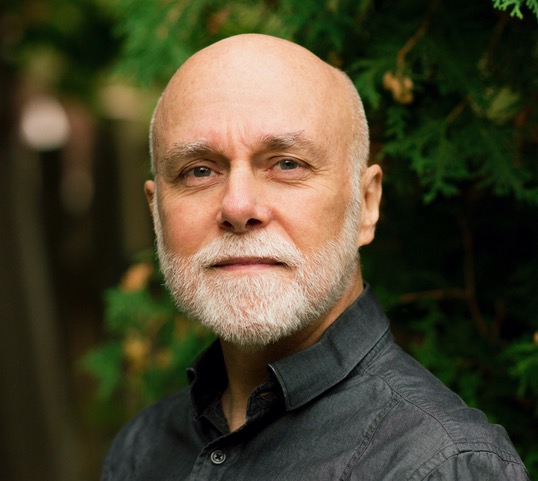
Stéphane Roy is an acousmatic composer. His art esthetics allow him, after thorough experimentations with sound materials, to extract expressive properties and give these works teleological motion.Stéphane Roy is also a musicologist. He has written a number of papers and a book on the analysis of electroacoustic music (L’Harmattan, Paris, 2003), which earned him the 2003-04 Prix Opus — Book ofthe Year. His works have won several awards and mentions in national and international electroacoustic composition competitions. His album L’inaudible received the 2019-20 Prix Opus —Album of the year — Actuelle and Electroacoustic Music. His works have been programmed throughout Europe and the Americas.
He holds a doctorate in electroacoustic composition and a PhD in musicology, both from Université deMontréal. He has taught at the Université de Montréal, at Queen’s University (Ontario), and music conservatories both in Québec and abroad. From time to time, he gives lectures on his work.
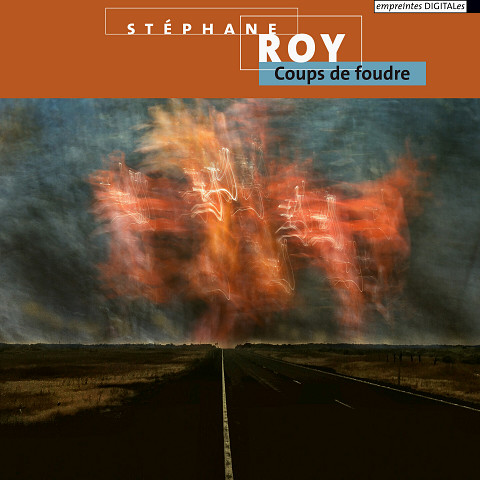
Stéphane Roy is an Associate Composer of the Canadian Music Centre (CMC), member of the Canadian Electroacoustic Community (CEC), and his works have been published by various labels, including empreintes DIGITALes (Kaleidos, 1996; Migrations, 2003; L’inaudible, 2019; Coups de foudre, 2025). He is currently a member of the Board of Directors of Groupe Le Vivier.
[English translation : François Couture]
Program
Après, les cendres (2023) 15’19”
Après, les cendres is an acousmatic work inspired by the poems ICBM (Intercontinental Ballistic Missile) and Nous sommes installés sous le tonnerre… [Under thunder] taken from the collection of poems Pour les âmes (Typo, 1993) by Québécois author Paul-Marie Lapointe (1929-2011).
ICBM (Intercontinental Ballistic Missile) evokes, among other things, humankind lulled by a false sense of security. The metaphor of sleep used in the text symbolizes an anesthetized conscience in the face of the unthinkable, as the lines “un bombardier repose à tes côtés / tes nuits sont assurées!” [a bomber rests by your side / your nights are safe!] ironically emphasize. In Nous sommes installés sous le tonnerre…, a terrible prophecy is announced: “le signe de la foudre marque les hommes au jour le jour” [the sign of lightning weighs on men day after day]. Fate governs our existence, and its inevitability haunts our minds.
The first three sections of Après, les cendres — noir présage, chants de mines, mur des silences — evoke the obsessive nature of fate and its manifestation in the realm of dreams. An introspective universe is created by the presence of ephemeral, furtive sounds, tormented, insistent melodies, and materials shaped by unstable spatial movements, all of which conspire to create a dreamlike universe. These sections conclude with a chimeric melody that seems to slide towards an abyss.
The final section of the work — incandescente fureur — begins with the fulfilled prophecy. A day of fury! The incandescent dawn rises in the thrust of a implacable martial motif inspired by the verses “dans la terreur arborescente des pics et des marteaux / dans le filet des sirènes / prisonniers des heures et des armes” [in the arborescent terror of spikes and hammers / in the net of sirens / prisoners of hours and arms] (Nous sommes installés sous le tonnerre…).
The work concludes with the pain left behind in the ashes of war, as perfectly expressed in this moving line: “les enfants se recroquevillent comme des feuilles brûlées” [children curl up like burnt leaves] (ICBM (Intercontinental Ballistic Missile)). We then witness the ascent of delicate, evanescent matter, freed from Earth’s gravity, like shattered souls pursuing their infinite journey.
Avec le temps... [excerpts] (2022-2024) 15’09”
•Tressaillement
•Errance
•Chute
•Fracture
•Fugacité
Time passing like a quiet caravan, a perpetual flow that ignores human beings with their consciousness of past, present and future, a movement that nothing can derail or slow down and that flows inexorably through infinite small slices of “present”: this is the background on which our existences unfold. Music, like any art of time, unfolds in this dimension, but at the same time it gives it a human face, creating an experiential time where the temporal flow, either precipitous and elusive or frozen in suspension, “remembers” or “anticipates,” contracts, dilates, and wraps around itself in an endless loop.
Avec le temps… is a 5.1 multichannel acousmatic suite that includes nine miniatures with their own temporal identity. These miniatures can be presented in variable geometry and assembled in a different order for each concert to highlight new dynamic relationships between them. I leave it to the listener to determine the temporality of these different moments. But beyond the temporal thematic, there is the music which dominates experiential time through its phonographies, its spatial configurations, its meaningful silences, its lyricism, and its fury. “Sound-footprints” recur at various moments throughout the acousmatic suite, as well as a leitmotiv formed by an iteration in echo, which can be regular, in contraction or in dilation, and which symbolizes experiential time.
Complete texts on electrocd
Natasha Barrett (no/gb)
Natasha Barrett (NO/UK) is a composer, new media artist and researcher. She creates acousmatic, electronic,and live-electroacoustic music, public-space sound installations and audiovisual works. She is widely recognised for her artistic exploration of 3D sound and ambisonics. She is fascinated by the sound that the world has to offer - nature, culture, people, places; nuances, human expressions, performers and their instruments, and the distinctive ambiance of different spaces. In her music she tries to harness the energy, beauty and unique edgy rawness of these sounds, which all find their place inthe grand scheme of music. In addition to her solo career, she regularly collaborates with performers, visual artists, architects and scientists, often drawing on data emulating or created by real-world processes as asource for artistic exploration. Some of the highlights include 3D audiovisual artworks with the USA-based OpenEndedGroup, science-art sonification in collaboration with geoscientists, and live electronicscollaborations with soloists and ensembles such as Ensemble l’Itinéraire (FR) and Cikada (NO). She is also the co-director of the performance ensemble Electric Audio Unit that curates and performs spatial music concerts in Norway. Her work is commissioned and performed worldwide and has received awards in 35 international competitions, including the most prestigious prize available for Nordic composers, the Nordic Council Music Prize. Her music is released on Persistence of Sound (UK), Sargasso (UK), Lawo (NO), Aurora (NO), empreintes DIGITALes (CA), and numerous compilations. She has held professorships in Norway and Denmark, and now works freelance.Program
Dusks Gait (2018) 12’00”
As dusk falls, an ecosystem of fictional creatures appear, projecting their characters through their gait, or in other words, the manner in which they move. Dusk's Gait celebrates moments of real nature that may easily expire. The composition captures many late evenings and nighttime experiences of nature, and fantasies behind the veil of darkness. Dusk’s Gait was composed during an Edgard Varèse guest professorship at the Electronic Studios of the Technical University Berlin, and in the composer’s own studio.
The Swifts of Pesaro (2024) 6’07”
In November 2023, while preparing for the premiere of a large orchestra and live electronics composition I had some days off from the intensity of performance, people and concert halls. To unwind, I visited a few ofthe recordings I made during the warm nights of Pesaro (Italy) earlier in the summer.
Experimenting with these recordings resulted in ambient and immersive soundscapes, which, unlike the high-energy composition materials I was currently working on, I didn't think much more of. It was also a time of meditation amidst the destruction wreaking havoc in the world in the end of 2023. Later on I found solace in these materials and experimented with how they could live on in a short composition. The result is The Swifts of Pesaro. Dedicated to eco-acoustics researcher and sound artist David Monacchi.
Toxic Colour (2024) 15’20”
Mining. Construction. Industry. Cleanup or coverup? The first outdoor exhibition showcasing aerial photography that captured the human impact on natural landscapes was "The Earth from the Air" by French photographer Yann Arthus-Bertrand, shown in Paris in 2000. The paradox of these mesmerising photos, incontrast to the often ravaged human-altered landscapes that they capture, has become the theme of many photo-art projects. Despite my being repeatedly drawn to such stunning imagery, their statements are becoming lost in our oversaturated world of digital visual media. I thought it was time to make a statement insound. Toxic Colour was commissioned by EAU with support from Arts and Culture Norway.
We thank the Norwegian Embassy in Ottawa for making the artist’s visit to Montreal possible.

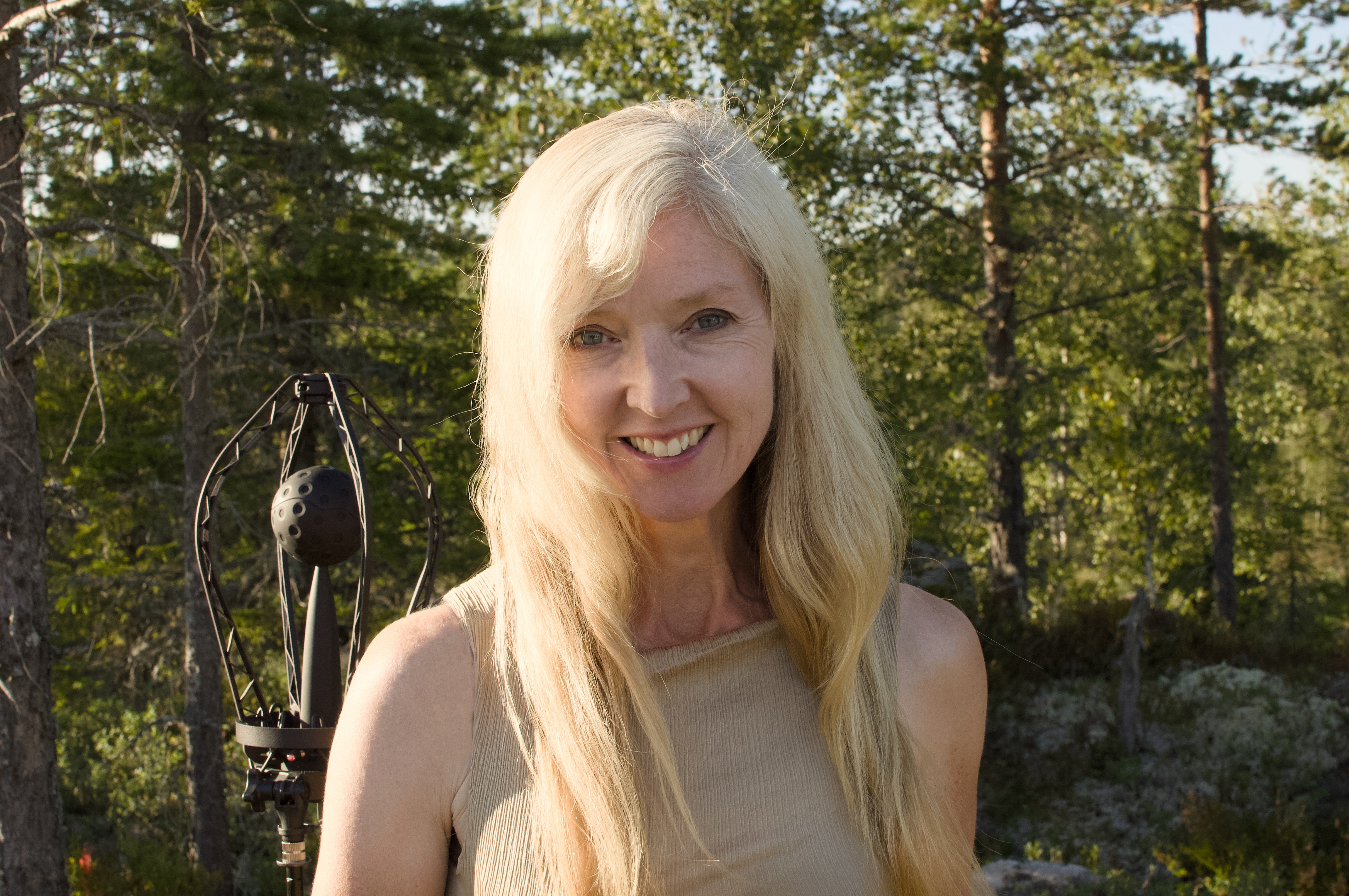
October 30, 2025
Night 2 -
8pm
Bloc_1
1345 Ave. Lalonde, Montréal, QC H2L 5A9
Daphne Oram
Daphne Oram (1925–2003) was a pioneering British composer, engineer, and inventor who helped shape the foundations of electronic music. Best known as the co-founder of the BBC Radiophonic Workshop (1958) and the creator of the Oramics system, she was among the first to treat sound as a malleable, visual material rather than a product of traditional instruments.Born in Wiltshire, she declined a place at the Royal Academy of Music to join the BBC at seventeen, becoming one of its first female studio engineers. Fascinated by recording technology, she spent nights experimenting with tape, cutting, looping, and reversing sounds—independently developing techniques parallel to Pierre Schaeffer’s musique concrète. Her persistence led to the creation of the Radiophonic Workshop, but frustrated by its focus on producing radio sound effects rather than experimental art, she left in 1959 to establish her own studio in Kent.
There, she invented Oramics, a groundbreaking “drawn sound” system that translated hand-drawn shapes on 35mm film into electronic tones. For nearly two decades, Oram composed music for theatre, film, television, and advertising while refining her system. Works like Four Aspects (1960) and Broceliande (1969–70) reveal a visionary approach combining science and art.
Despite limited recognition in her lifetime, Oram’s influence has grown enormously. Modern composers view her as a trailblazer of sound synthesis and human–machine interaction. Her restored archives, the Oramics anthology, and the exhibition of her machine at London’s Science Museum now affirm her status as one of the most original and overlooked voices in the history of electronic music.
Program
Fours Aspects (1960) 8’06
Created a year after Oram resigned from the BBC Radiophonic Workshop in London, the experimental studio she’d co-founded and helped to design. Oram described Four Aspects as “a study in electronic tone colour from pure tones to abundant complexity… Electronic music specifically designed to be a simple bridge with conventional music”, with a simple A-B-A-coda form (the four aspects of the title) and tonic/dominant chords built upon lower frequencies of the harmonic series.
Akousma would like to thank
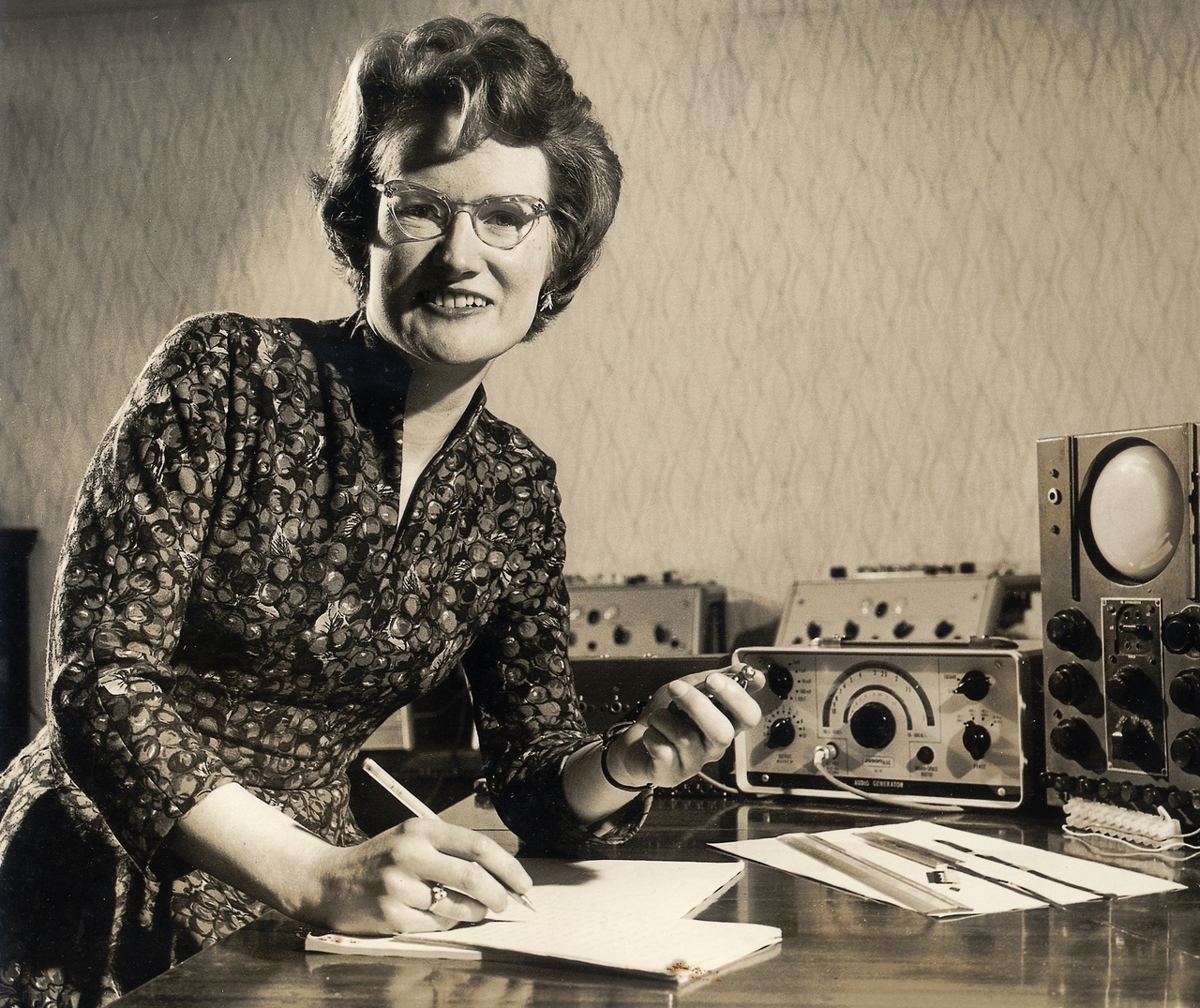
Joseph Sannicandro (us)
Joseph Sannicandro is a writer and artist based in Montreal, focusing on creative laborand (un)popular culture, with a particular attention to sound. He is co-founder of themusic blog A Closer Listen, producer of the Sound Propositions podcast, and currently lectures in Media Studies at SUNY Purchase. Joseph’s musical compositions and sound art projects have been published by international labels, broadcast on community and internet radio stations, presented in festivals such as Montreal’s Suoni per il Popolo, and at galleries and museums including IKLEKTIK (London), Diagonale (Montreal), the Museodel Sannio (Benevento, Italy) and the Istanbul Cinema Museum.Program
al-rambla / Las Ramblas 20'
Comprised primarily of recordings of rivers, fountains, aqueducts, irrigation canals, and waterwheels in Granada (Andalucía) and Blanca (Murcia), al-rambla / Las Ramblas blurs boundaries between traditional and modern, rural and urban, Muslim and Christian, attending to the circulation of water as a means of challenging these supposed binaries. Field recordings made during a sound art residency at Centro Negra (AADK Spain).
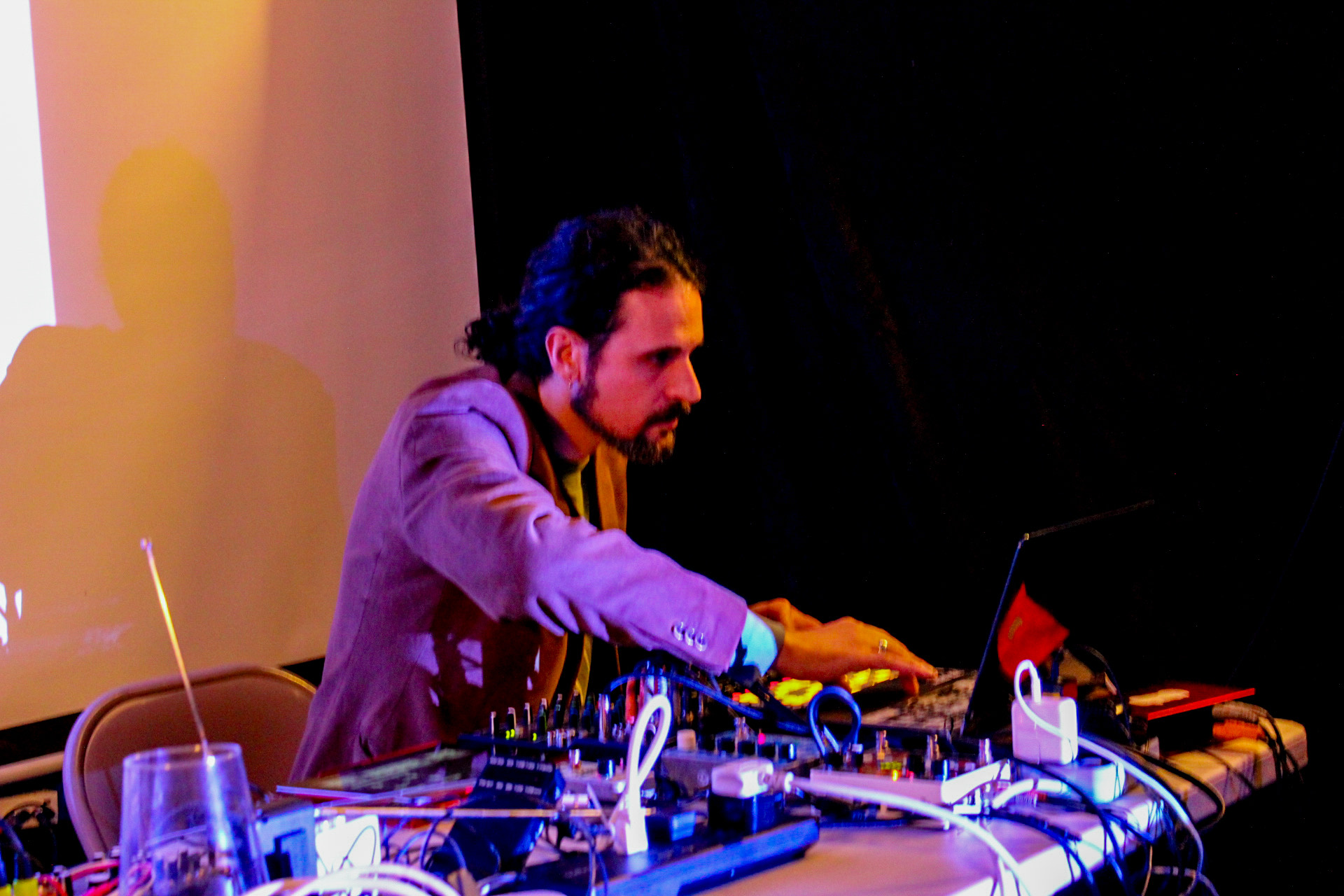
Rehab Hazgui (tn/ca)
Rehab Hazgui is a composer and sound artist. Her work explores ways of learning new forms of language through conscious listening and the relationships that beings maintain with their culture, heritage, society, and landscape, conceived as living and engaged participants. Her research investigates how sound emerges within dynamic landscapes whether biological, geophysical, or shaped by human transformations. Her practice focuses above all on the act of listening, understood as an experience that shapes our perception of space, nurtures our relationship to it, and reveals the profound engagement that hearing establishes with the world.Program
Chôra (premiere) 10’00”
Chôra explores sound as a perceptive matrix, a receptive space in which sonic phenomena emerge without ever being fully contained. The installation unfolds continuously evolving soundscapes that leave traces in the listener’s memory while shaping their perception of space and time. Each sequence functions as a fleeting imprint, revealing how listening brings presence into being and structures our relationship to the world. The work highlights the tension between place and what manifests within it, between memory and perception, emphasizing that sound, like Chôra, is both the condition for and the revelation of sensible experience. This work has been conceived exclusively for Akousma.
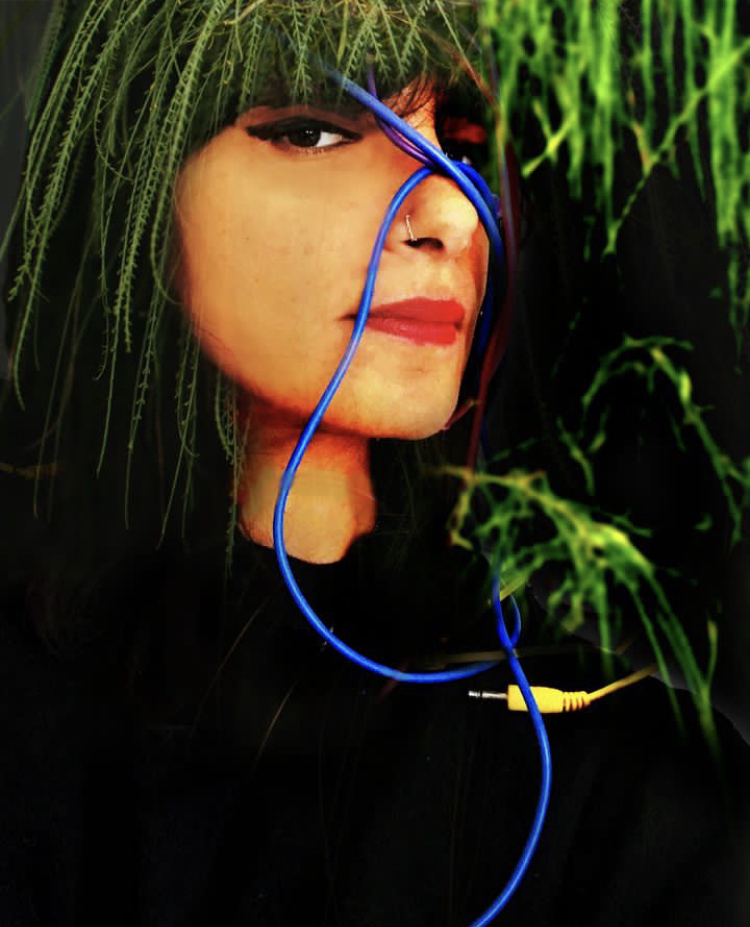
October 30, 2025
Night 2 -
Bloc_2
1345 Ave. Lalonde, Montréal, QC H2L 5A9
Christian Bouchard (ca)
Christian Bouchard creates unique and captivating sonic worlds through the fluid assemblage of soundscapes, experimental electronics, glitch, and acousmatic art. His musical style can be described as a thrilling interplay where energetic moments with nervous overtones are counterbalanced by moments of suspension. For some, this may be a musical universe free of reference points where one can get lost, but where one can also let oneself be carried away without worrying about form.Christian Bouchard studied electroacoustic composition at the Conservatoire de musique de Montréal under Yves Daoust. He practices music for theater, film, installation music, and more recently, ambient music. He is a founding member (with Christian Calon, Mario Gauthier, and Monique Jean) of the live electroacoustic quartet Theresa Transistor. His music has won composition awards in various national and international competitions. His most recent album IV, on empreintes DIGITALes, was named album of the year at the Prix Opus in 2025. Christian Bouchard also works as a sound recordist in cinema.
Program
Spirale plastique (2024) 20’04”
Original quadraphonic version - premiere
Remember the ocean of plastic? It was a hot topic several years ago, Go see it today. The horror... But from a sound perspective, imagine plunging microphones into it to hear the different textures, shapes, and sizes of plastic swirling around: pellets, bags, bottles, containers, always rotating in the same direction at different speeds. Let's swirl together in this plasticized, recyclable, compostable, and listenable suite.
Produced with the support of the Canada Council for the Arts.

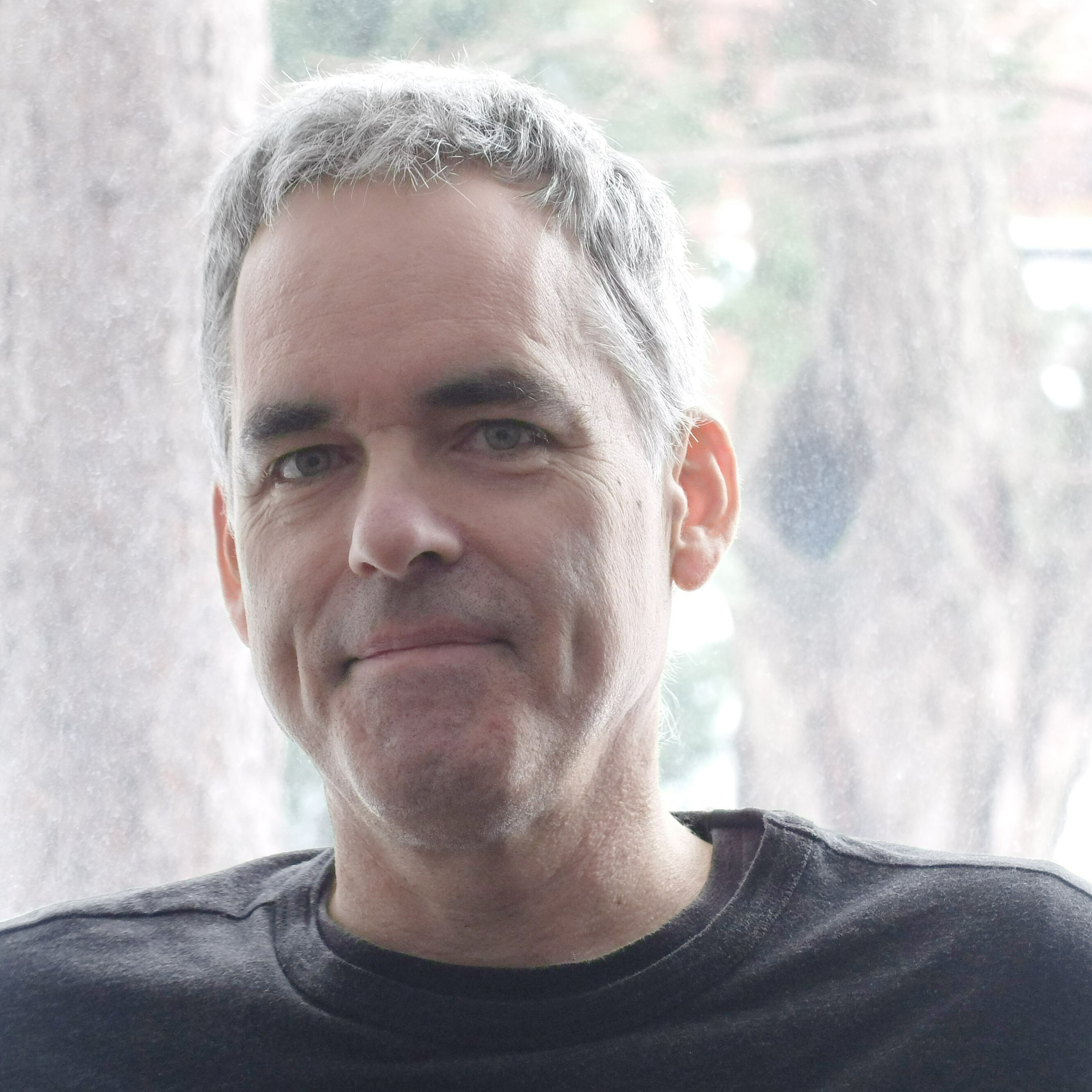
Credit : Julia Jones
Robert Schwarz (au)
Robert Schwarz incorporates a background in computer music, sound studies, and architecture into his installations, live performances, and recorded music. By approaching acoustic phenomena that are usually hidden from our perception, and through the subtle interplay of field recordings and sound synthesis, he creates abstract structures that suggest deep, dissociative states of listening and encourage a critical examination of established listening practices.Schwarz has released critically acclaimed albums for Superpang, Gruenrekorder, ETAT, and ALTER, and developed a series of walk-in sculptures in Los Angeles, Brussels, and Vienna. He has presented works at institutions and festivals such as the MAK Center for Art and Architecture in Los Angeles, Kunsthalle Wien, Tokyo Arts and Space, CTM Berlin, Skaņu Mežs, and Musikprotokoll. Schwarz was selected for the 2023/24 year of the SHAPE+ Platform for innovative music and audiovisual art and is co-founder and curator of the PARKEN festival in Vienna.
Program
Stridulation 1-14 30’00” (2024-2025)
Robert Schwarz will present a condensed live version of his latest album Stridulations 1–14, specially arranged for Akousma’s acousmonium. Through solitary chirps and roaring synchrony, insects and arthropods communicate via “stridulations,” the diverse calls produced by rasping friction between two chitinous body parts.
On Stridulations 1–14, Vienna-based sound artist Robert Schwarz offers a speculative resynthesis of these calls in tandem with ethological field recordings of real-world insect life. Continuing themes introduced in Schwarz’s previous release Clear Cues (ETAT, 2022) and partly derived from a 2023 composition commissioned by ORF’s Musikprotokoll, Stridulations 1–14 investigates the audible characteristics of entomological communication, with particular focus on the spatio-temporal sonic patterns emerging from swarm behaviour and synchrony.
Grounded in two decades of field recording, Schwarz guides listeners through richly textured, abstract sonic entities that invite a dissociative listening state. Constantly shifting the boundary between natural and synthetic, Stridulations 1–14 follows an internal logic informed by intraspecies acoustic communication, crafting a stirring, disorienting sound environment that opens alternative perspectives on the relationships between humans, animals, and machines.
We thank the Austrian Cultural Forum and the Québec Office in Berlin for making the artist’s stay in Montréal possible.


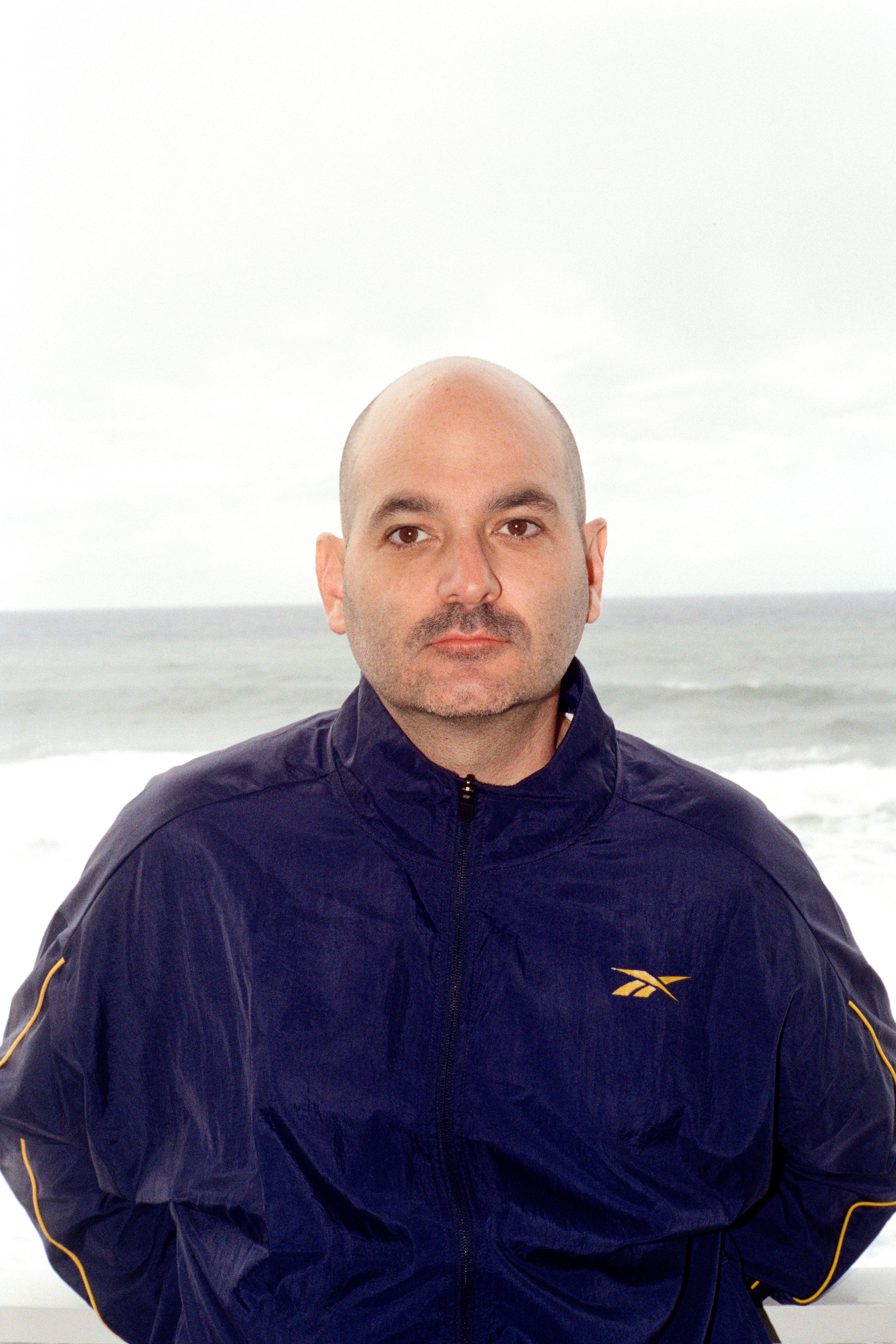
October 31, 2025
Night 3 -
8pm
1345 Ave. Lalonde, Montréal, QC H2L 5A9
Akousma celebrates its 21st edition in the heart of the 21st century with a unique experience looking toward the music of the future! On this electrifying Halloween night, dive into an unprecedented immersive adventure: forget the seats and let yourself be carried as you wander through a sonic space filled with unheard creations by a lineup of eclectic artists — Akousma’s true signature.
🎃
Julia E. Dyck
Julia E. Dyck is a Canadian artist and hypnotherapist based in Brussels whose multidisciplinary practice merges sound, performance, and expanded states of consciousness to explore the porous boundaries between body, technology, and the (sub)conscious. Rooted in relational and speculative methodologies, her work invites audiences into immersive experiences of collective transformation, using voice, vibration, and storytelling as portals to new modes of perception and presence. Julia is a member of the Audio Placebo Plaza collective and the t.r.a.n.c.e community hypnosis project.Her work has been presented internationally, including at the Karachi Biennale (PK), LOOP (KR), Bétonsalon (FR), Haus der Kulturen der Welt (DE), Cafe OTO (UK), Q-O2 (BE), Palais des Beaux-Arts de Paris (FR), Musée d’art de Joliette (CA), Musées d’art et d’histoire de Genève (CH), and Darling Founderie (CA).
Program
Introduction to Somnambulism 20’
Introduction to Somnambulism takes a hypnosis session as its score, moving from breath-led resonance through hypnotic induction and the frequencies of tuning forks toward a guided visualization. The performance weaves voice, electronics, and resonant instruments to explore the subconscious as a space for listening and transformation.

Credit : Laurens Leroy
Pía Baltazar, Daniela Huerta & Gadi Sassoon
Pia Baltazar is an intermedia composer, undisciplinary researcher, and curator. With formal training in engineering, art philosophy, and musical composition, her approach is situated at the intersection of interdisciplinary theory, interactive design, and artistic production. Her artistic research interests revolve around the creative possibilities of the encounters between the senses (vision, hearing, touch, etc.) and the involvement of physicality and spatiality, both in the creative process and in the aesthetic experience.Born in Mexico, Daniela Huerta is a Berlin-based multimedia artist and researcher. Exploring the intersection of sound and consciousness, Huerta channels mythology and storytelling into a richly layered artistic practice that bridges the real and the imaginary, creating vivid landscapes that aim to connect with the depths of the human psyche. Rooted in myth and transmutation, her approach is equal parts raw and refined—a boundary-pushing exploration of sound as a narrative force.
Gadi Sassoon is a classically trained composer, performer, and transmedia electronic artist from Milan whose work spans traditional music releases, live performance, installations, and experimental software. Sassoon’s work appears on labels such as Ninja Tune, ASIP, Warner, and Universal, including projects nominated for the British Arrows, Brit Awards, and Mercury Prize; his synthesis research has been published in MIT Computer Music Journal. He was the keynote performer at the 2025 UN Global AI Summit and runs the community label and radio show Classical Computer Music.
Wilding AI is a nomadic, polymorphous research-creation laboratory that challenges the domestication of artificial intelligence to foster creative expression. The collective explores poetic, experimental, and hijacked (mis-)uses of generative algorithms, particularly in the field of spatial audio, to investigate new forms of human-machine collaboration. With a focus on public engagement, Wilding AI has conducted several research-creation residencies and open presentations at renowned digital arts spaces, including MUTEK Montreal and SAT, MUTEK Mexico, MONOM Studios as part of the CTM Festival in Berlin, and 4DSOUND at the FIBER Festival in Amsterdam.
Program
Ghosts of Future Grafts 12’15”
Pía Baltazar, Daniela Huerta & Gadi Sassoon
Ghosts of Future Grafts is one of the artistic outcomes of Wilding AI, a year-long collective research-creation project questioning the role and impact of AI in artistic creation, with a focus on spatial audio. Starting from the premise of considering AI agents as collaborators rather than tools, the three composers experimented with various generative systems for audio generation and spatialization, reflecting on the impact of AI as a general-purpose technology on our existence. Focusing in particular on the question of embodiment—both from the perspective of the creative tools and of the effect AI has on our nervous systems—the composers adopted a posture of refusal and generated the materials of the composition solely through performances with voice and analog synthesizers, stemming from a session at Gadi Sassoon’s Milan studio, immersing in it and considering it as an instrument of its own.
In a second phase, during a residency at UdeM, they worked on the spatial sculpting of this raw material to shape it as a kind of sacrificial ritual of the ghosts of AI agents, an exorcism of their invasion of our nervous systems. The piece was included in the collective composition FERAL FREQUENCIES, premiered in SAT’s dome on MUTEK’s opening and diffused at SPATIAL Festival at MONOM at Funkhaus Berlin in August and September 2025. It is presented at Akousma for the first time as a standalone composition.
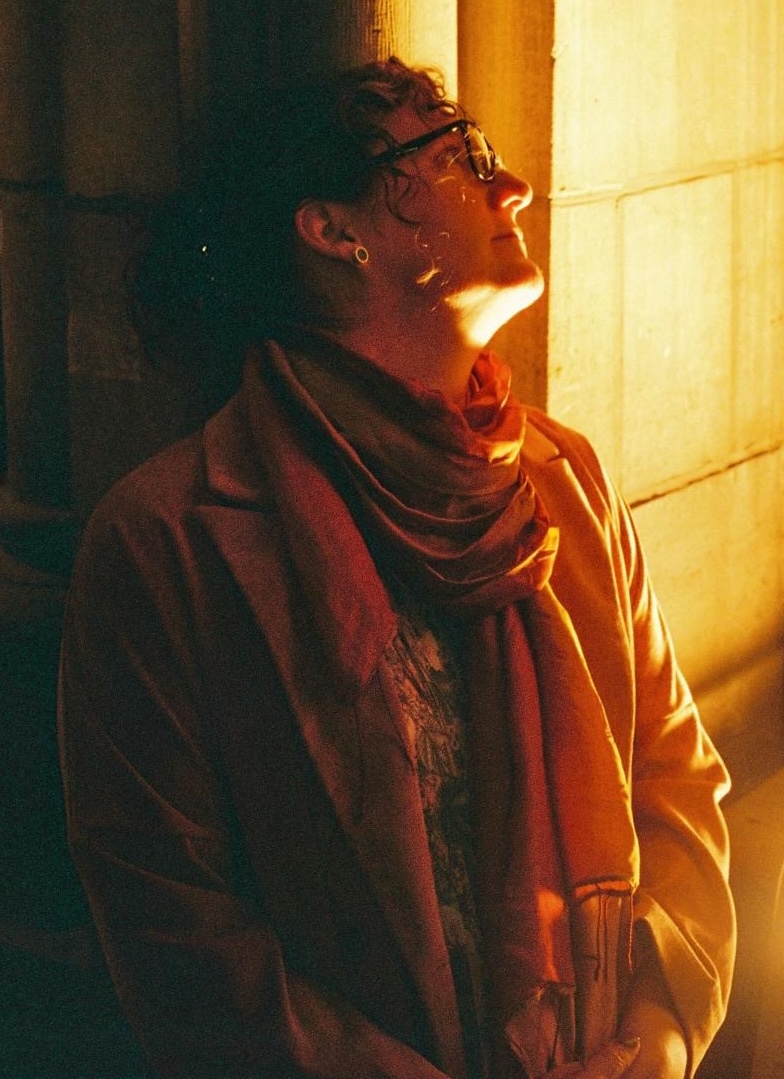
Pia Baltazar - Crédit photo: Hooman Jalidi
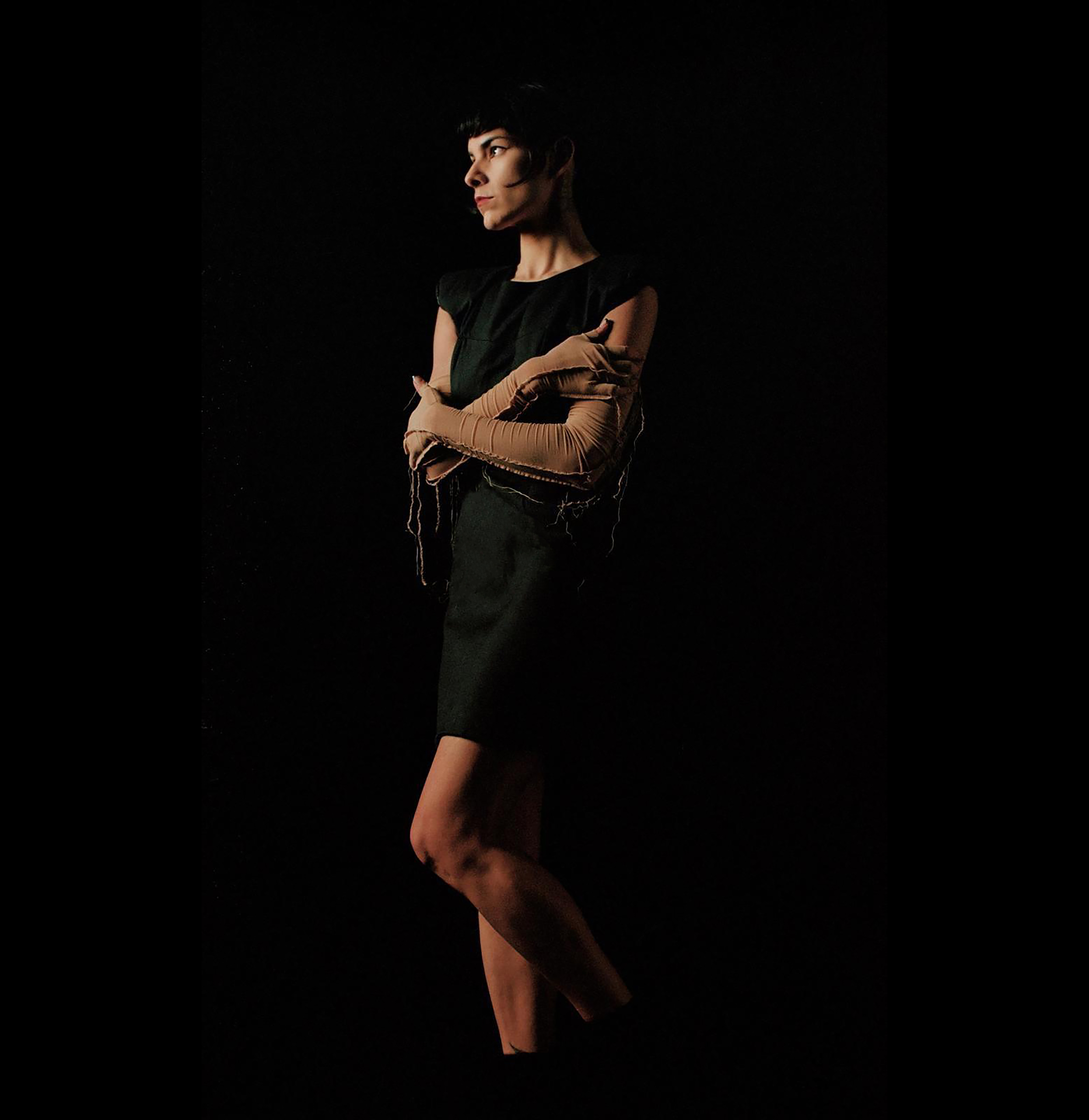
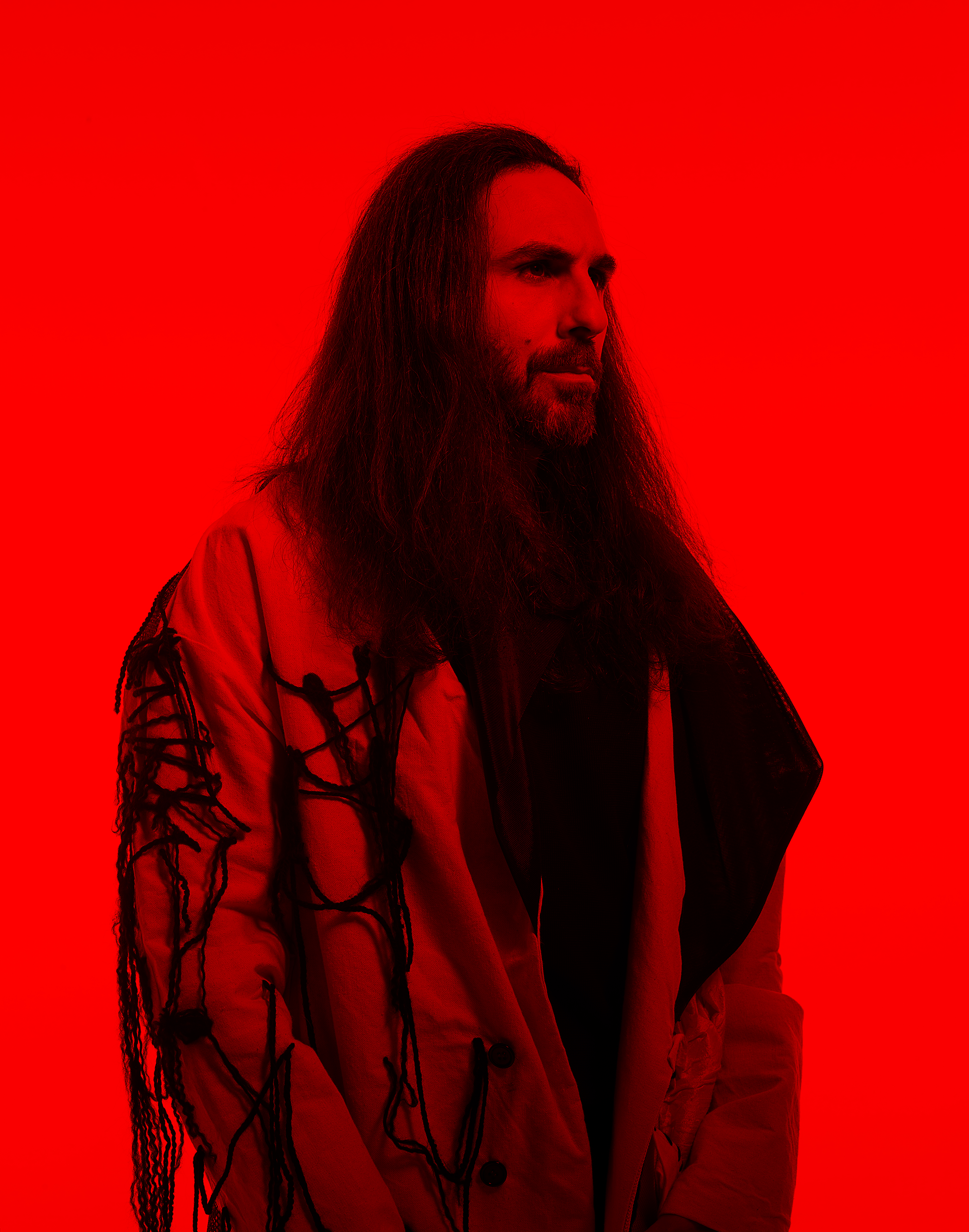
Gadi Sassoon- Credit: Luigi Ziliani 2025
James O’Callaghan
James O’Callaghan is a Canadian composer and multimedia artist based in Berlin. His work has been described as “very personal… with its own colour anchored in the unpredictable” (Goethe-Institut). It spans chamber, orchestral, live electronic, and acousmatic idioms, audio installations, video-music, site-specific performances, electronic dance music, and interdisciplinary collaboration—most recently with choreographer Édouard Lock and artist Lois Brown.In 2016, an album of his acousmatic works, Espaces Tautologiques, was released by empreintes DIGITALes, and his extended collaboration with Ensemble Paramirabo resulted in a portrait album of his works in 2019, entitled Alone and Unalone. His music has been performed in 29 countries and has received nearly forty prizes and nominations, including the ISCM Young Composer Award (2017), the Salvatore Martirano Award (2016), and the SOCAN Foundation John Weinzweig Grand Prize (2014). Significant nominations include the Gaudeamus Award (2016), Prix Métamorphoses (2018), and two JUNO Awards (2014, 2020). In 2021, he received the Prix Opus for “Composer of the Year.”
Program
Fear of the Dark 20’
Fear of the Dark is an examination of the spooky side of electronic sound. In acousmatic music, where sounds are separated from their source and played in the dark, I find the mystery of the unknown cause of sound tantalizing. In this piece, I wanted to play with this quality, imagining the ‘sound object’ undergoing separation anxiety through its disembodiment. Tapping in to the biological responses we have to spatialized audio, I use the clichéd sounds associated with the horror genre as my primary material — sounds heard quite often in the acousmatic genre as well! The piece pays homage to Michael Jackson’s Thriller and Hildegard Westerkamp’s Cricket Voice, and includes references to other genres of ‘dark’ electronic music: industrial, dark techno, EBM, and witch house. Created for a Halloween concert in Montréal’s AKOUSMA festival, Fear of the Dark is a love letter to all things dark and electronic in sound.
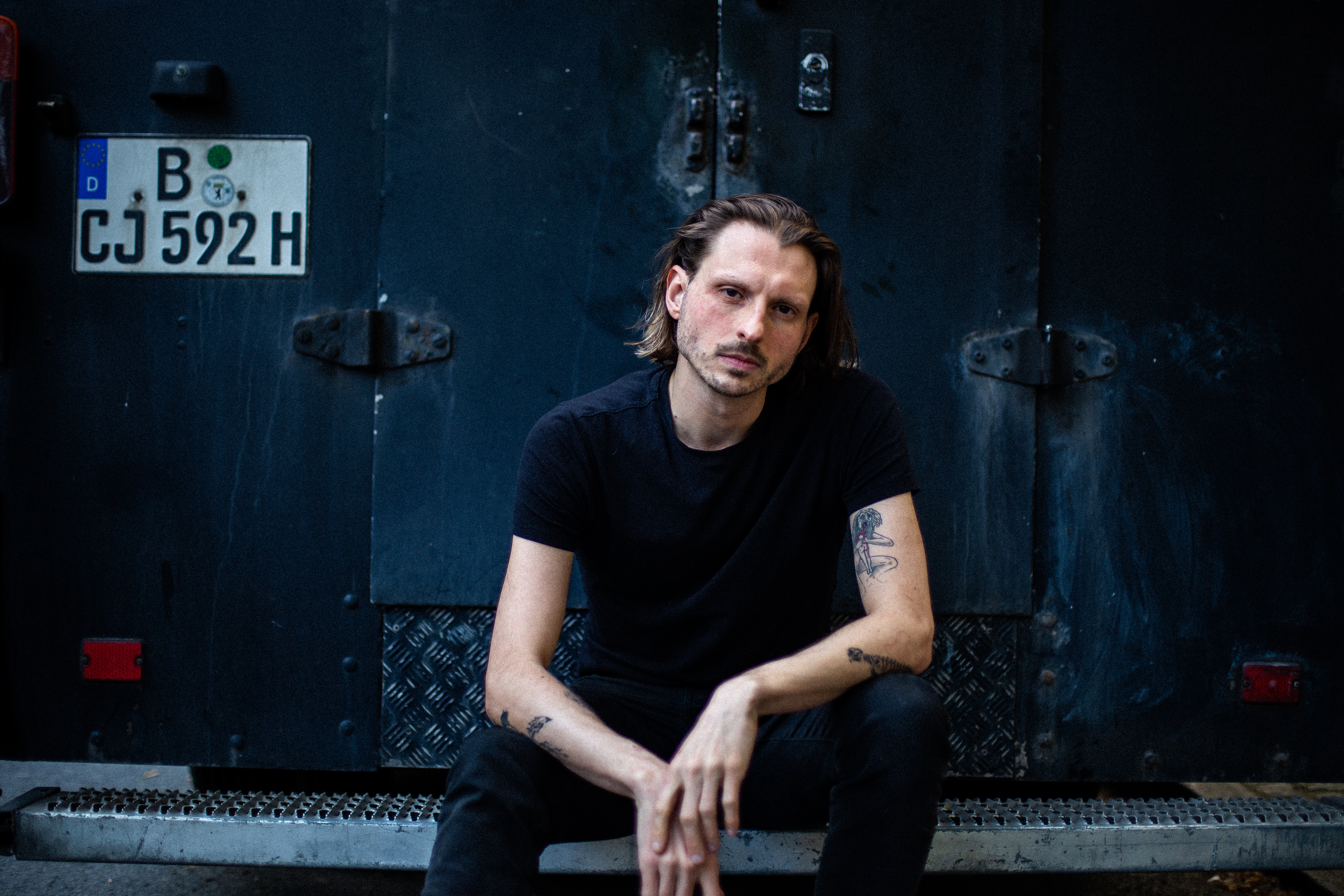
Anne-F. Jacques (ca)
Anne-F Jacques is a scrap metal worker and sound artist based in Montreal, Canada. She is interested in amplification, oblique interactions between materials, and the construction of various contraptions and idiosyncratic systems. Her particular focus is on low technology, trivial objects, and unpolished sounds. She regularly creates installations, performances, and ephemeral interventions. She has worked, among others, with Tsonami Festival (Chile), Experimental Intermedia (New York), Ftarri (Tokyo), Sonic Protest (Paris), Casa del Lago (Mexico), Centrale for Contemporary Arts (Brussels), High Zero (Baltimore), and MEM (Bilbao).Program
Mouches à feu [Creation] 20’
Electricity, a little friction, and a light flowing through our fingers. It crackles, it fades, it smells warm. You could almost start dancing.
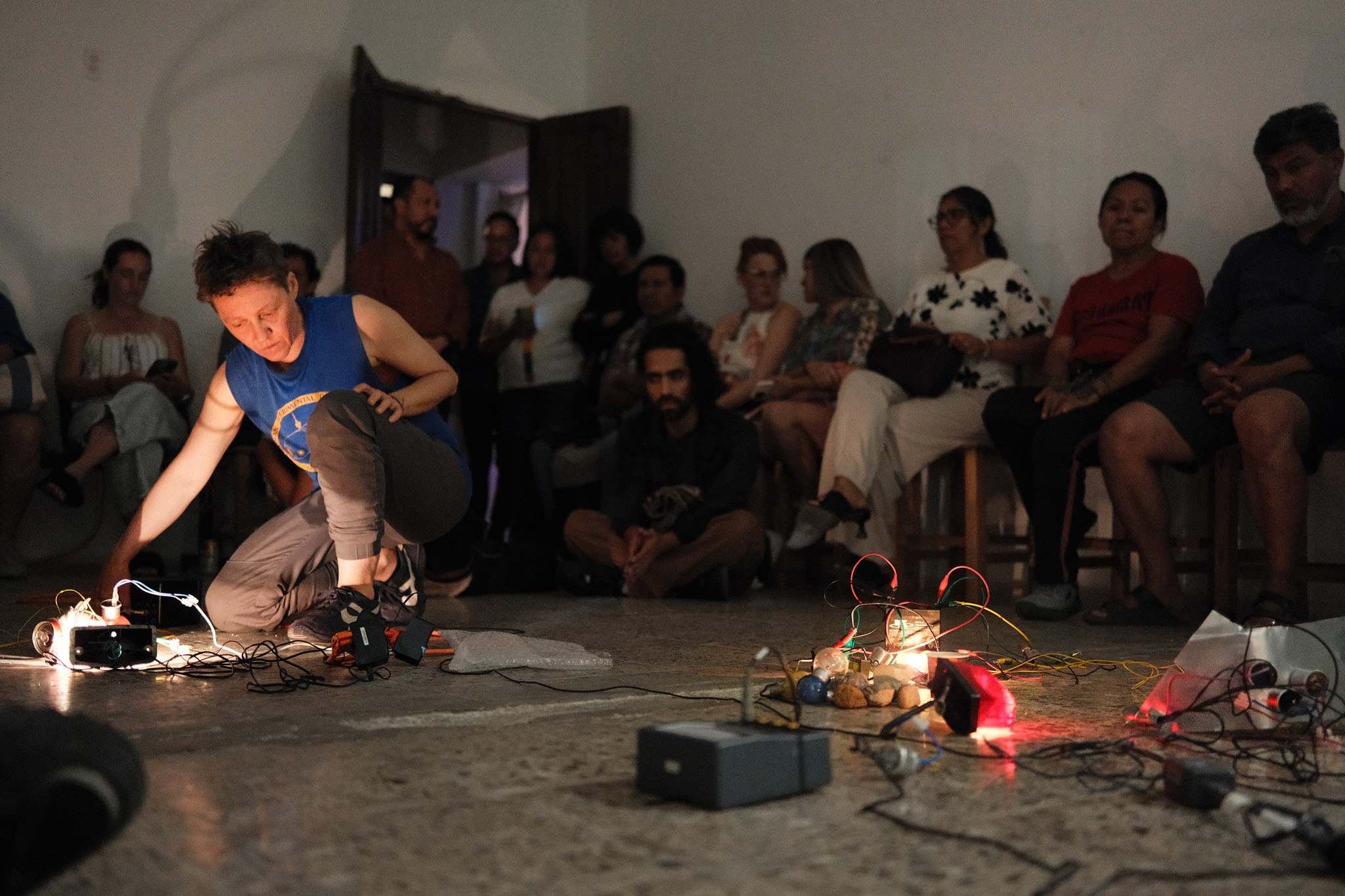
IRL [Amanda Harvey]
IRL is a sound artist, producer, and DJ whose practice uses waveforms to explore memory, the body, and space. Working with lo-fi sample banks alongside analog and modular synthesis, they craft music that balances raw texture with emotional depth. Their trance-inducing sets weave ambient drone, big bass, and looping melodies into immersive soundscapes that invite reflection and transformation.Beyond performance, IRL co-produced two seasons of the podcast A Kind of Harmony and hosts Heart Full, a monthly radio show on n10.as. Their releases span labels including SURF (LX), Psychic Liberation (BE), Kapha Selections (NYC), Personal Records (MTL), and Interzone (MTL).
Program
Big Room 20’
This piece explores the creation of imagined spaces through sound — an experiment in sonic architecture. Bass, drones, radiophonic tones, vocal traces, and microtonal textures move through the room, shaping an experience that oscillates between motion and stillness, transmission and transformation, echoing memories lived, forgotten, and imagined.
“Movement in the imagination, oscillating in a strange dream space between radio exception and virtual traveling. Listening with detachment, simultaneously as if moving across vast spaces, yet immobilized in one spot [...] watching the world go by, tuned into organic and synthetic rhythms normally inaudible to the human ear without radio receivers, hydrophones, parabolic sound reflectors, satellite listening stations.”
—David Toop.
William Jourdain, alias Automatisme
William Jourdain, known under the moniker of Automatisme, is creating generative ambient dubtechno since 2011 and is active as an archivist and digital development agent. He has been publishingon various labels such as Constellation Records, Force Inc. / Mille Plateaux, Neologist Productions,Liberation Through Hearing, Outlines, Dream Disk Lab, G89 Records, Fallen Moon Recordings,Diffuse Reality Records / Teorema, Archipel, Polygon Network and Humidex.Program
[Live Set] 20’
William Jourdain (Montreal, CA), aka Automatisme, is a generative ambient dub techno artist. For Akousma 2025, he reshapes live his 2025's works, released on Humidex, Diffuse Reality and Archipel record labels. Sound design here is an act of shaping and carving, using principles like repetition, contrast, density and echo to evoke emotional states such as intensity and release. Automatisme thrives in the generative music terrain where he blurs the line between sonic art and dreamlike exploration.
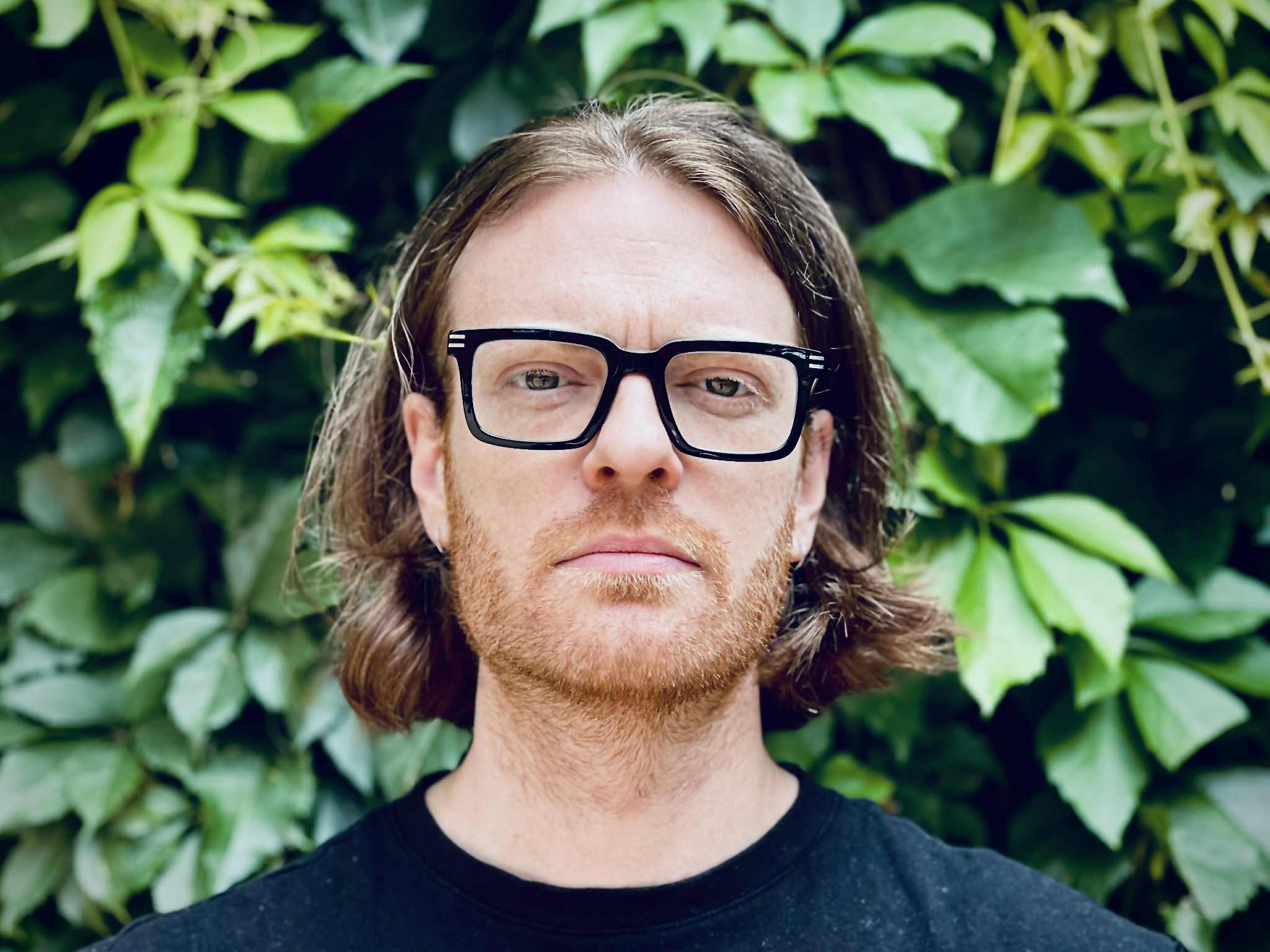
Orchestroll
Orchestroll is an interdisciplinary music duo, a crucible for the bold aspirations of Jesse Osborne-Lanthier and Asaël Richard-Robitaille. It is a space for sonic exploration where they challenge the boundaries of music theory, genres, and classifications—a free environment where sound territories merge and transform beyond conventional limits. Their work is rooted in deep artistic introspection, fueled by a passion for questioning musical codes and a profound belief in the transformative power of art. Orchestroll fuses disparate elements—ambient, noise, new-age, post-industrial, Americana, folk, musique concrète, pop, rock, orchestral, and indie—sometimes filtered through the lens of underground club music. These styles intertwine and overlap, forming a spectral imprint, an aesthetic residue of a constantly evolving soundscape.
Program
Corrosiv (extraits) 20’
In 2025, Orchestroll released their double album Corrosiv on 29 Speedway, preceded by the singles Velvet Myst and Cable Eater.
Partly recorded at the legendary EMS Studios in Stockholm, this project interrogates cultural stagnation and the erosion of artistic depth, while highlighting the processes that strip sound of its reach and substance. Corrosiv explores sonic degradation, much like language worn down through repetition, recycling, and detachment. At the intersection of tension and form, the work blends heavy, slow-moving structures with textures that gradually decay. It stands as both a mirror and a resistance to the forces that tend to render music passive, reducing it to mere background noise or a detached aesthetic.